
Table of Contents
Why Brick Walls Leak Water During Heavy Rain
If you’ve noticed a brick wall leaking water during heavy rain, you’re not alone — it’s a frustratingly common issue for homeowners and property managers across the country. While brick itself is durable, water enters through the mortar joints, tiny cracks, and failed flashing systems that are meant to keep moisture out.
According to the Brick Industry Association, water penetration in brick walls almost always occurs through deteriorated mortar or improperly installed flashing — not through solid clay brick. Over time, mortar joints crack and erode, creating pathways for moisture. Capillary action then pulls water deeper into the wall assembly, especially in older structures that lack modern waterproofing.
One telltale sign of ongoing moisture penetration is efflorescence — those chalky white salt deposits that appear on brick surfaces. While efflorescence itself is harmless, it signals that water is moving through the masonry and evaporating, leaving dissolved salts behind. This moisture weakens the entire system over repeated wet-dry cycles.
Missing or clogged weep holes are another culprit. These small openings at the base of brick walls allow water to escape; when they’re blocked or were never installed, water becomes trapped behind the brick, accelerating freeze-thaw damage during cold months. As trapped water freezes and expands, it widens cracks and loosens mortar, making the wall even more vulnerable to the next storm.
Applying a silane siloxane sealer provides a breathable barrier that repels bulk water while still allowing water vapor to escape. However, sealing treatments work best after deteriorated mortar has been professionally repaired.
For homeowners across the country, professional tuckpointing nationwide services can restore the integrity of your brick walls by removing damaged mortar and installing fresh, color-matched joints. A custom quote from our team gives you an honest assessment of what your brickwork needs to stay dry and secure.
How Brick Walls Channel Water and Where Leaks Start
To understand why tuckpointing is essential, let’s first look at how brick walls handle water and where things go wrong. A brick wall is not a solid, waterproof shield — it is a system designed to absorb, channel, and release moisture. When that system works correctly, occasional dampness evaporates harmlessly. When it fails, you may face the frustrating reality of a brick wall leaking water into your home. Recognizing the signs of water intrusion early helps property owners protect their investment before structural damage spreads.
Brick is naturally porous. During rain or snow, the face of your brick wall absorbs a small amount of water through countless microscopic pores. Under normal conditions, that moisture migrates back to the surface and evaporates when the sun comes out. According to technical standards published by the Brick Industry Association, this absorption-and-drying cycle is expected in properly built masonry walls and does not indicate a defect. The real safeguard built into the wall is a system of intentional gaps at the base, called weep holes. Weep holes give water a direct path to drain out of the wall cavity before it can soak through to interior surfaces. When weep holes become clogged with debris, mortar droppings, or soil, trapped water has nowhere to go. Instead, it presses inward, saturates insulation and framing, and eventually shows up as damp patches on interior walls.
Water does not need a large opening to create problems. The most common entry points are often barely visible from the ground, yet they allow moisture to bypass the wall’s natural drainage entirely. Industry guidelines from the International Masonry Institute highlight several frequent failure locations that every property owner should watch for:
- Deteriorated or missing mortar joints — weathered mortar crumbles over time, creating narrow channels that funnel rainwater deep into the wall assembly.
- Cracked bricks — freeze-thaw cycles in colder regions cause brick faces to spall and split; each winter, ice widens those fractures, giving water an even larger passage the following spring.
- Failed sealant around windows and doors — caulking dries out and loses adhesion, opening hairline gaps where wind-driven rain easily penetrates.
- Missing or damaged flashing — metal flashing above windows, doors and rooflines directs water outward, so when it rusts through or was never installed correctly, runoff flows straight into the wall instead of away from it.
One visual clue that moisture is traveling where it should not is a white, powdery deposit on the brick surface called efflorescence. As groundwater or rain moves through the masonry, it dissolves natural salts inside the brick and mortar. When the water reaches the surface and evaporates, those salts are left behind as a chalky residue. Efflorescence is not harmful by itself, but it is a reliable warning that water is consistently moving through your brick wall. In regions with repeated freeze-thaw cycles, the same trapped water that causes efflorescence also expands inside cracks, turning small imperfections into significant structural concerns over time.
Proper tuckpointing addresses the most common source of water intrusion — failing mortar joints — by removing soft, weathered material and replacing it with dense, water-resistant mortar. When combined with modern waterproofing measures, such as a silane siloxane sealer that penetrates the brick surface without trapping moisture inside, the repair restores the wall’s ability to manage water as originally designed.
Once you know where leaks start, B&G’s tuckpointing and waterproofing services can restore your wall’s integrity and protect your property. If you notice crumbling mortar, persistent efflorescence, or interior dampness after rain, prompt masonry repair near me can prevent further damage. Our team serves property owners nationwide, combining decades of hands-on experience with industry-best practices to stop leaks at their source and keep your brickwork performing for years to come.
Deep Dive: Mortar Deterioration, Efflorescence, and Structural Risks
If you have a brick wall leaking water, the root cause almost always traces back to one of three common mechanisms: deteriorating mortar, persistent efflorescence, or destructive freeze-thaw cycles. Understanding these risks is the first step toward protecting your property and knowing when to call for professional help. The following comparison table outlines the most common water intrusion issues, their signs, and how we address them.
| Cause | Typical Signs | Severity | Repair Method |
|---|---|---|---|
| Mortar joint cracks | Visible gap in mortar, water stain on interior wall after rain | Moderate – can lead to larger damage if ignored | Tuckpointing (spot or solid) by a professional |
| Blocked weep holes | Water pooling at base of wall, efflorescence near ground | Moderate – prevents drainage, increases hydrostatic pressure | Clear weep holes, install insect screens, ensure proper drainage |
| Efflorescence | White powdery deposit on brick surface, often after rain | Low to moderate – indicates moisture but not immediate failure | Identify and fix moisture source, clean with appropriate solution, apply sealer if needed |
| Structural cracks | Long, stepped cracks through bricks and mortar, interior wall cracks | High – may indicate foundation or wall movement | Professional assessment; may require rebuilding sections, foundation repair, or carbon fiber reinforcement |
The issues described above range from cosmetic nuisances to urgent structural threats. By learning what to look for, you can take action before a minor leak turns into a costly repair.
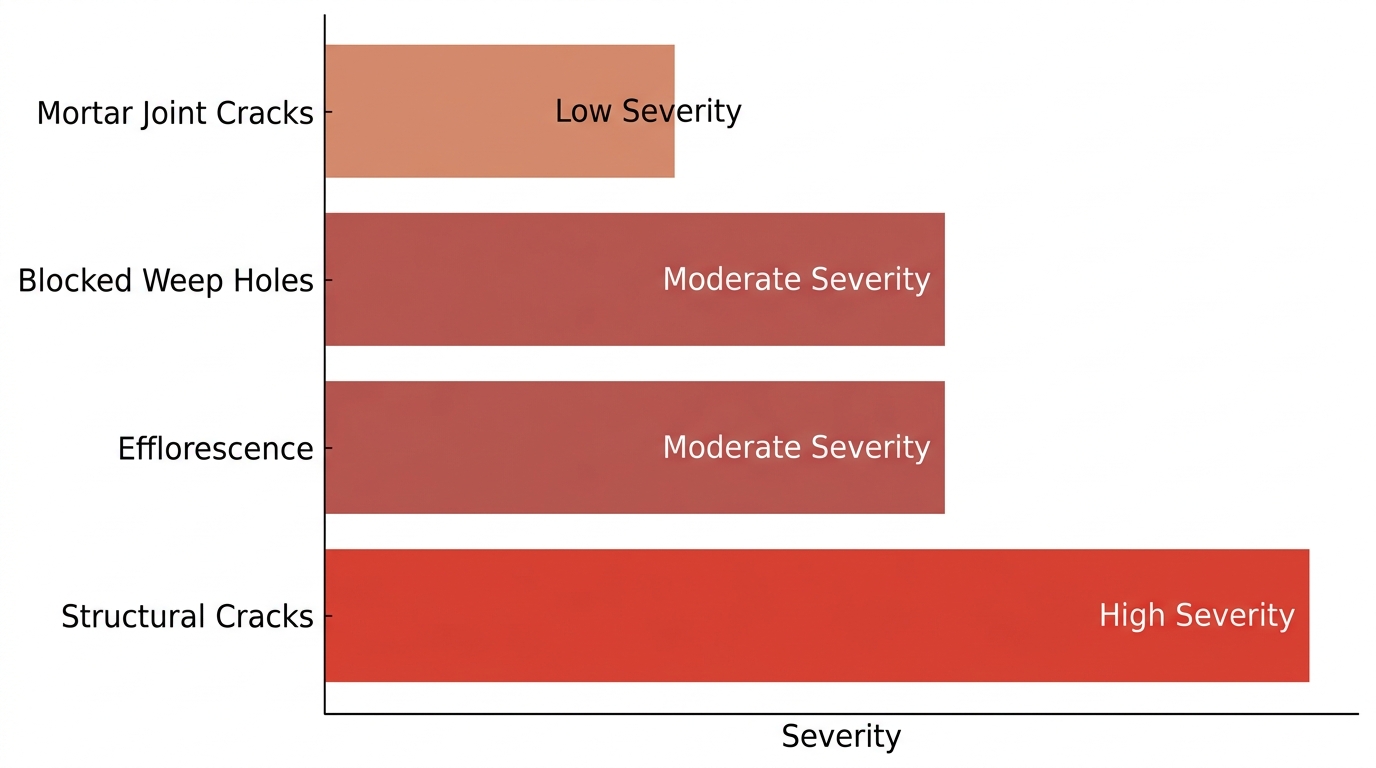
Water intrusion issues in brick walls by severity level.
The Role of Mortar Joints in Water Seepage
Mortar joints are the most vulnerable part of a brick wall. While brick itself is highly durable, the mortar binding the units together naturally deteriorates over time from weather exposure, building settlement, and age. When hairline cracks form or mortar begins to crumble and recede, these compromised joints create direct pathways for rain and groundwater to seep into the interior of your wall.
According to technical guidelines published by the Brick Industry Association, water penetration through masonry is almost always a joint-related problem rather than a brick absorption issue. Even small, barely visible gaps can admit significant moisture during a heavy storm. Once water gets behind the brick veneer, it can soak insulation, rot wooden framing, and create the damp conditions that lead to more serious problems like efflorescence and freeze-thaw damage.
The only lasting solution is to remove the damaged mortar and repoint the joints. Hiring an experienced tuckpointing contractor ensures the old mortar is ground out to the proper depth and replaced with a compatible mix that matches both the strength and color of your original masonry. Done correctly, tuckpointing restores the wall’s watertight barrier and structural integrity for decades.
Efflorescence: A Warning Sign of Moisture Problems
Efflorescence appears as a white, powdery deposit on brick surfaces, often showing up after a rainy period. The Brick Industry Association defines efflorescence as a crystalline salt residue left behind when moisture within the wall migrates to the surface and evaporates, depositing dissolved minerals. It’s important to understand that efflorescence itself is not a structural defect–it is a symptom indicating that water is moving through your masonry.
We often see homeowners in St. Louis worry about white stains on their brick; here’s what that typically means. While mild efflorescence can be a temporary cosmetic issue, persistent or recurring white deposits signal an ongoing moisture problem. The International Masonry Institute emphasizes that identifying and fixing the water source is the essential first step before any cleaning or surface treatment is applied. Ignoring the signs can allow the hidden moisture to eventually cause more extensive damage to mortar and brick.
After addressing the moisture source, a silane siloxane sealer can help repel future water intrusion. These penetrating sealers work by bonding chemically with the masonry to create a water-repellent barrier that still allows the wall to breathe. The combination of proper drainage, intact mortar joints, and a breathable sealer keeps your brick looking great and structurally sound.
Freeze-Thaw Cycles and Structural Damage
The freeze-thaw cycle is one of the most destructive forces in masonry. Here’s how it works: water enters through cracked mortar or porous brick, temperatures drop below freezing, and the trapped water turns to ice. Water expands by about 9% when it freezes, a fact confirmed by Brick Industry Association technical notes, exerting tremendous pressure outward on the surrounding brick and mortar.
When this cycle repeats over many winters, the surface of the brick begins to flake and peel away–a condition called spalling. If your brick wall is leaking water, the trapped moisture can freeze and cause severe structural damage including deep cracks, bulging sections, and loose bricks that become a safety hazard. The International Masonry Institute’s professional guidelines warn that freeze-thaw damage can escalate rapidly once the protective brick face is compromised, exposing softer interior material to even more water absorption.
These conditions require urgent professional assessment. Our team can evaluate whether the damage is limited to surface spalling or indicates deeper wall instability. Understanding these risks makes it clear why professional tuckpointing and waterproofing are essential. We aim to enhance the appearance and improve the integrity of your house or building, and B&G’s mission is to provide residential and commercial customers with an outstanding level of service. Next, we’ll explore the best repair methods available. If you notice any of these signs, contact us for a custom quote–we Service Tuckpointing Clients Nationwide & Offer In-House Financing!
Practical Steps to Diagnose and Fix Brick Wall Leaks
Now that you know what causes brick wall leaks, here are the practical steps to fix them. If your brick wall leaking water has become a recurring headache, a systematic approach–from careful inspection to applying the right penetrating sealer–can halt water intrusion through brickwork and protect your home’s structural integrity. We’ll walk you through three key stages: diagnosing the leak sources, removing white mineral deposits on brick, and sealing the surface with a high-performance water repellent.
How to Inspect Your Brick Wall for Leak Sources
Start your inspection on a dry, sunny day when any moisture problems will be most visible. Walk around your property and look closely at the brickwork, focusing on areas where water could enter.
- Check mortar joints and bricks. Examine the mortar for cracks, missing chunks, or crumbling sections. Use your fingertip to feel for loose or powdery mortar along the joints–this tactile check often reveals deterioration that isn’t immediately visible. Missing bricks or spalled (flaking) brick faces are also common entry points for water.
- Inspect around openings. Pay special attention to gaps around windows, doors, pipes, and vents. Failed caulking or separated flashing here can funnel rainwater directly into the wall cavity.
- Trace water stains. Look for dark streaks, damp patches, or white efflorescence deposits on interior and exterior walls. These stains map the path water follows, often pointing straight to the source of the leak.
If you notice severely deteriorated joints, consider professional spot tuckpointing to restore the wall’s integrity. Spot repairs can address localized damage before it spreads, but extensive cracking or bulging may require a broader evaluation. Our team can provide on-site assessments to determine the right scope of work.
Cleaning and Removing Efflorescence
White, chalky efflorescence is a telltale sign of water moving through masonry. Removing it not only improves the wall’s appearance but also prepares the surface for sealing.
For light deposits, mix a solution of white vinegar and water at a 1:5 ratio. Apply it with a stiff nylon brush, working in small sections to gently lift the salts. Avoid using wire brushes because they can scratch the brick face and create new pathways for moisture. Rinse the wall thoroughly with clean water and allow it to dry completely before proceeding.
For stubborn or heavy efflorescence, use a commercial masonry cleaner formulated for brick. Always follow the manufacturer’s instructions and test the cleaner on an inconspicuous area first. According to authoritative industry masonry technical resources from the International Masonry Institute, proper surface preparation–including salt removal–is essential for any penetrating water repellent to bond effectively. Once the wall is clean and dry, you are ready to apply the sealer.
Applying Silane Siloxane Penetrating Sealers
A silane siloxane sealer works by soaking into the brick and mortar, where it chemically bonds to create a water-repellent barrier that still allows the wall to breathe. This balance is critical for preventing trapped moisture and freeze-thaw damage.
For a successful application, start with a clean, completely dry wall. Use a low-pressure pump sprayer to apply the sealer evenly, working from the bottom upward to avoid streaking. Apply a single, generous coat that saturates the surface without heavy runoff. The sealer needs at least 24 hours of dry weather to cure properly; damp conditions during curing can compromise adhesion and long-term performance. Professional-grade silane siloxane products typically outlast hardware-store alternatives because they offer better breathability and deeper penetration.
To help you choose the right sealer, here’s a quick comparison of the most common types.
| Property | Silane | Siloxane | Silane/Siloxane Blend |
|---|---|---|---|
| Molecular size | Small – penetrates deeply into substrates | Medium – forms a repellent layer near the surface | Combined – provides both depth and surface repellency |
| Vapor permeability | Excellent – highly breathable | Good – breathable but slightly less than silane | Excellent – balances permeability and repellency |
| Longevity | 5-10 years depending on exposure | 5-10 years, often with better UV resistance | 8-12 years with good formulation |
| Application | Ideal for dense substrates like brick and stone | Better for more porous substrates like mortar and concrete | Versatile – suitable for most masonry types |
| Appearance change | Invisible, no surface film | May darken slightly when wet | Typically invisible when fully cured |
For most residential brick walls, the silane/siloxane blend stands out as the most versatile choice. It delivers the deep penetration of silane combined with the surface repellency of siloxane, which translates to longer protection and excellent vapor permeability. We maintain that this balance is what makes it the go-to option for homeowners who want durable, breathable waterproofing without changing the look of their brickwork.
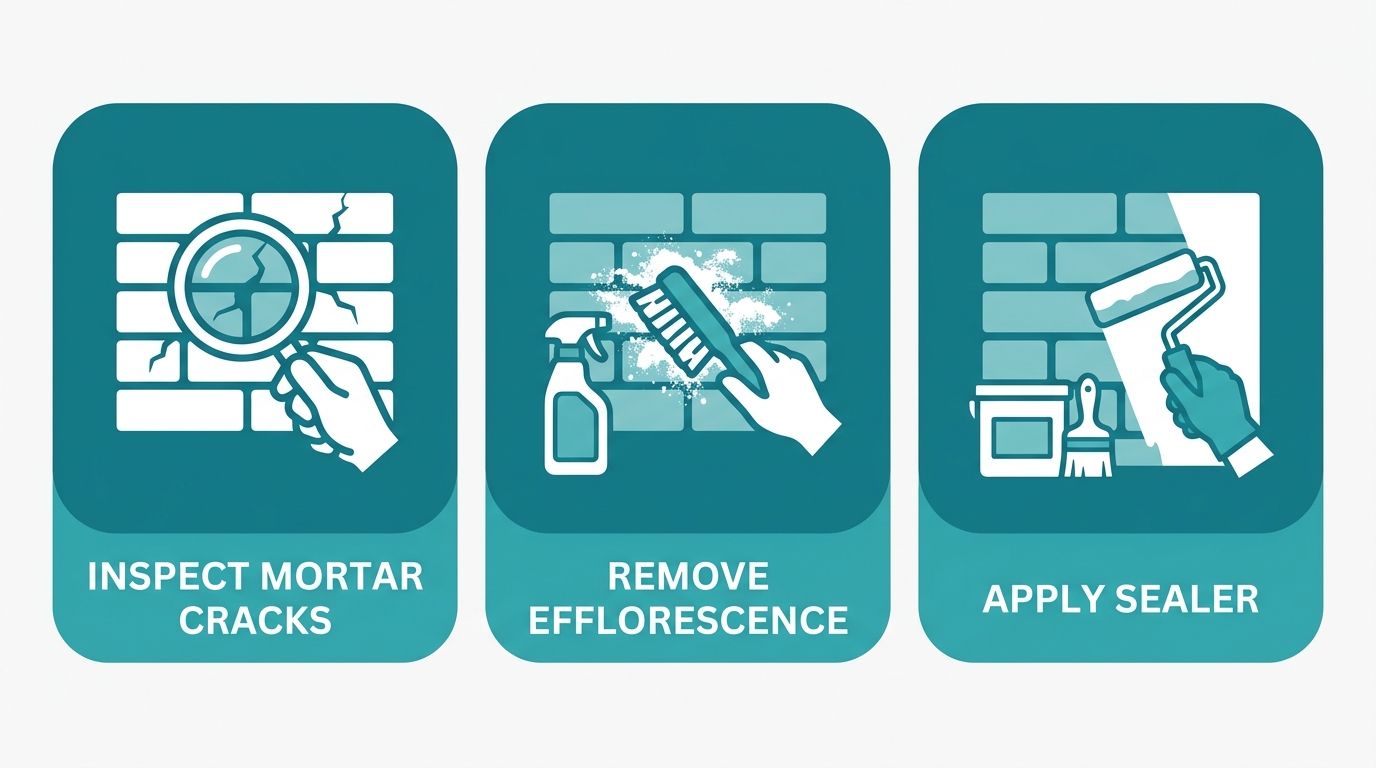
Three-step process for diagnosing and fixing brick wall leaks
If the damage you find during inspection is extensive or the leak source is hard to reach, our waterproofing and tuckpointing services can handle the heavy lifting. We aim to enhance the appearance and improve the integrity of your house or building, and we’re ready to help you stop water intrusion through brickwork for good. [Get A Quote] from our team to discuss the best solution for your situation.
Advanced Waterproofing and Restoration for Brick Masonry
When you notice a brick wall leaking water, the issue often runs deeper than surface moisture. Left unaddressed, water intrusion can compromise the structural integrity of your brickwork, leading to costly damage. We aim to enhance the appearance and improve the integrity of your house or building, which starts with a professional inspection to identify the root cause of the leak. With over a decade of experience serving homeowners and businesses nationwide, including historic properties in St. Louis, MO, our team follows proven methods to deliver lasting protection against the elements.
Advanced waterproofing centers on the use of breathable treatments that shield masonry without trapping internal dampness. A silane siloxane sealer is the industry standard for this task, repelling water at the surface while still allowing moisture vapor to escape. When applied correctly, it penetrates deep into the brick and mortar, forming a hydrophobic barrier that reduces freeze-thaw damage and staining. We rely on technical guidelines from the Brick Industry Association to ensure every sealant we select is compatible with the specific porosity and age of your building’s facade.
One clear warning sign of excessive moisture is efflorescence, a white, powdery deposit that appears when soluble salts migrate to the brick face. This residue is evidence of water moving through the masonry, and it must be cleaned and the moisture source corrected before any sealer is applied. Covering efflorescence without treating the underlying leak simply traps the problem behind a cosmetic layer. Our approach, informed by the International Masonry Institute’s best practices, begins with diagnosing the moisture path, whether it stems from deteriorated mortar joints, cracked brick, or poor flashing details.
Once a proper diagnosis is made, restoration becomes the critical next step. Waterproofing alone cannot fix crumbling mortar or spalled brick units. That’s why we integrate repointing–also known as tuckpointing–and brick replacement into every advanced waterproofing plan. Fresh, color-matched mortar restores the bond and seals joints against further water entry, while damaged bricks are carefully relayed to match the original masonry. For comprehensive brick restoration, including brick repair near me, B&G Tuckpointing delivers nationwide service backed by in-house financing options for larger projects.
Effective masonry protection demands more than a one-size-fits-all product. A thorough assessment reveals whether a wall needs a penetrating sealer, localized repointing, or a full-scale rebuild. Our team combines two decades of hands-on masonry experience with ongoing training in modern waterproofing technology, ensuring that every solution is tailored to your building’s unique requirements. By adhering to the standards set by the Brick Industry Association and the International Masonry Institute, we help property owners turn a leaking brick wall into a durable, dry, and visually appealing asset.
Frequently Asked Questions About Brick Wall Leaks and Waterproofing
Have more questions? Check out these FAQs. Many homeowners call us concerned about a brick wall leaking water after heavy rain. The most common culprits are deteriorated mortar, cracked bricks, missing flashing, and clogged weep holes that trap moisture inside masonry. Our team follows Brick Industry Association guidelines to pinpoint the exact cause.
How does tuckpointing help with waterproofing? Our tuckpointing near me services repair crumbling mortar joints that allow water intrusion through masonry. By removing and replacing the damaged material with a color-matched compound, we restore the wall’s natural water resistance and stop moisture penetration before it leads to structural damage.
How can I prevent water from seeping through brick walls? We recommend preventive maintenance, including applying a breathable silane siloxane sealer to above-grade brickwork and keeping weep holes clear of debris. When you notice white, powdery efflorescence on your brick, it signals moisture moving through the wall–an early warning we can address. B&G’s mission is to provide residential and commercial customers with an outstanding level of service. Contact us for a custom quote.
Protect Your Property with Professional Tuckpointing
When you notice a brick wall leaking water, the damage is already underway. Moisture seeping through deteriorated mortar joints can weaken your structure, foster mold, and lead to expensive repairs if left unchecked.
Professional tuckpointing from B&G Tuckpointing is the most reliable solution. We remove crumbling mortar and replace it with a precise, color-matched mix that creates a watertight seal. You may also spot a white, powdery deposit called efflorescence–a clear sign of moisture moving through your masonry. Our process stops this at the source, and for lasting defense, we apply a breathable silane siloxane sealer that sheds water without trapping vapors inside the brick.
With over a decade of experience, we offer both spot tuckpointing and full replacement to match the scale of any project. B&G’s mission is to provide residential and commercial customers with an outstanding level of service, and we back that with nationwide coverage and in-house financing. Contact B&G today for a custom quote and keep your brick walls dry for years to come.