
Table of Contents
Understanding Chimney Tuckpointing and Its Importance
Chimney tuckpointing, a key part of masonry restoration and tuckpointing, is the process of removing deteriorated mortar from chimney joints and replacing it with fresh mortar to restore structural integrity and appearance. Often called chimney repointing, this specialized technique goes beyond basic mortar repair–tuckpointing uses color-matched mortar lines for a uniform, seamless look that blends with the surrounding brickwork while repointing focuses purely on function.
This technique requires precision because chimney mortar endures extreme temperature swings, moisture exposure, and years of weather stress. The Brick Industry Association provides technical guidance on proper mortar mix and joint construction, and we follow these industry standards carefully. Our team at B&G Tuckpointing ensures the correct mortar composition and application method so that repairs last, avoiding mismatched materials that can accelerate future deterioration.
The importance of timely tuckpointing cannot be overstated. When mortar joints crack or crumble, water seeps into the chimney, leading to freeze-thaw damage that causes spalling bricks and structural instability. Signs that mortar joints need attention include crumbling or missing mortar, white powdery efflorescence, and visible gaps between bricks. Addressing these issues early prevents interior leaks and costly rebuilds while also boosting curb appeal. We aim to enhance the appearance and improve the integrity of your house or building through every restoration project we complete.
Understanding why tuckpointing matters is the first step; the next is knowing how we execute it with precision–and we make that process accessible for property owners anywhere. We Service Tuckpointing Clients Nationwide & Offer In-House Financing! Get a quote today to protect your chimney and preserve your property’s value.
Chimney Tuckpointing Basics: How It Differs from Repointing
Chimney tuckpointing in St. Louis is a specialized two-stage technique that restores a chimney’s crisp mortar lines while sealing out moisture. Unlike standard masonry repair, tuckpointing combines artistry with protection, making it a preferred choice for historic homes and visible chimney elevations. At B&G Tuckpointing, our mission is to provide residential and commercial customers with an outstanding level of service, and we’ve applied over two decades of masonry experience to help homeowners understand the distinctions between tuckpointing and repointing. Whether you need tuckpointing for chimneys to preserve your home’s character or chimney repointing to address structural issues, our team starts with a comprehensive assessment and explains which service will deliver the best long-term result.
During tuckpointing, our masons first cut a narrow groove between bricks using a grinder. A thin, colored mortar strip is then precisely applied to match the surrounding brick color, creating a sharp, uniform joint. This two-step process not only revives the chimney’s appearance but also seals out water, preventing spalling bricks down the road. With proper maintenance, tuckpointing for chimneys can preserve both beauty and protection for 15 to 25 years.
Chimney repointing, on the other hand, is a structural repair process. It involves removing deteriorated mortar to a consistent depth, then packing new mortar–selected to match the original strength (Type N, S, or M per Brick Industry Association guidelines)–and tooling it flush. This restores the joint’s load-bearing capacity and keeps water from penetrating the brickwork. Spalling bricks, which often result from water intrusion, indicate that repointing is needed to halt further masonry decay.
The differences between the two techniques are substantial. The following comparison table, based on Brick Industry Association best practices, provides a clear summary of repointing vs tuckpointing:
| Aspect | Tuckpointing | Repointing |
|---|---|---|
| Purpose | Aesthetic & protective – creates crisp mortar lines with a colored top coat | Structural – removes and replaces deteriorated mortar to restore joint integrity |
| Method | Two-stage: groove cut between bricks, then a slender matching strip applied | Single-stage: old mortar removed, new mortar packed and tooled flush |
| Materials | Colored mortar or putty to match brick color for visual harmony | Standard mortar (Type N, S, or M) matched to original joint strength |
| Longevity | 15-25 years with proper maintenance | 20-30 years when done with appropriate mortar |
| Cost | Higher per sq. ft. due to two-stage process and aesthetic focus | Moderate per sq. ft.; varies by joint depth and accessibility |
| Best For | Historic homes, visible chimney sections, color-focused restoration | General deterioration, waterproofing, overall masonry health |
As the table illustrates, tuckpointing is the go-to solution when visual appeal and historic character are priorities. Repointing, in contrast, is essential for correcting structural weaknesses and ensuring long-term durability. If your chimney shows widespread mortar degradation–such as crumbling joints, gaps, or missing mortar–consider professional mortar joint repair from B&G. We evaluate the condition of every joint and recommend either tuckpointing or repointing–or a combination–to suit your chimney’s specific needs. Whether you need a full tuckpointing makeover or targeted repointing, we tailor our approach to your chimney’s age, brick type, and exposure.
Spalling bricks often signal deeper moisture problems that repointing can correct before structural issues worsen. Our team assesses each chimney’s condition to recommend the right approach, and we can often restore appearance with tuckpointing in the same repair project. If left unaddressed, spalling can lead to costly brick replacement, so early intervention is key.
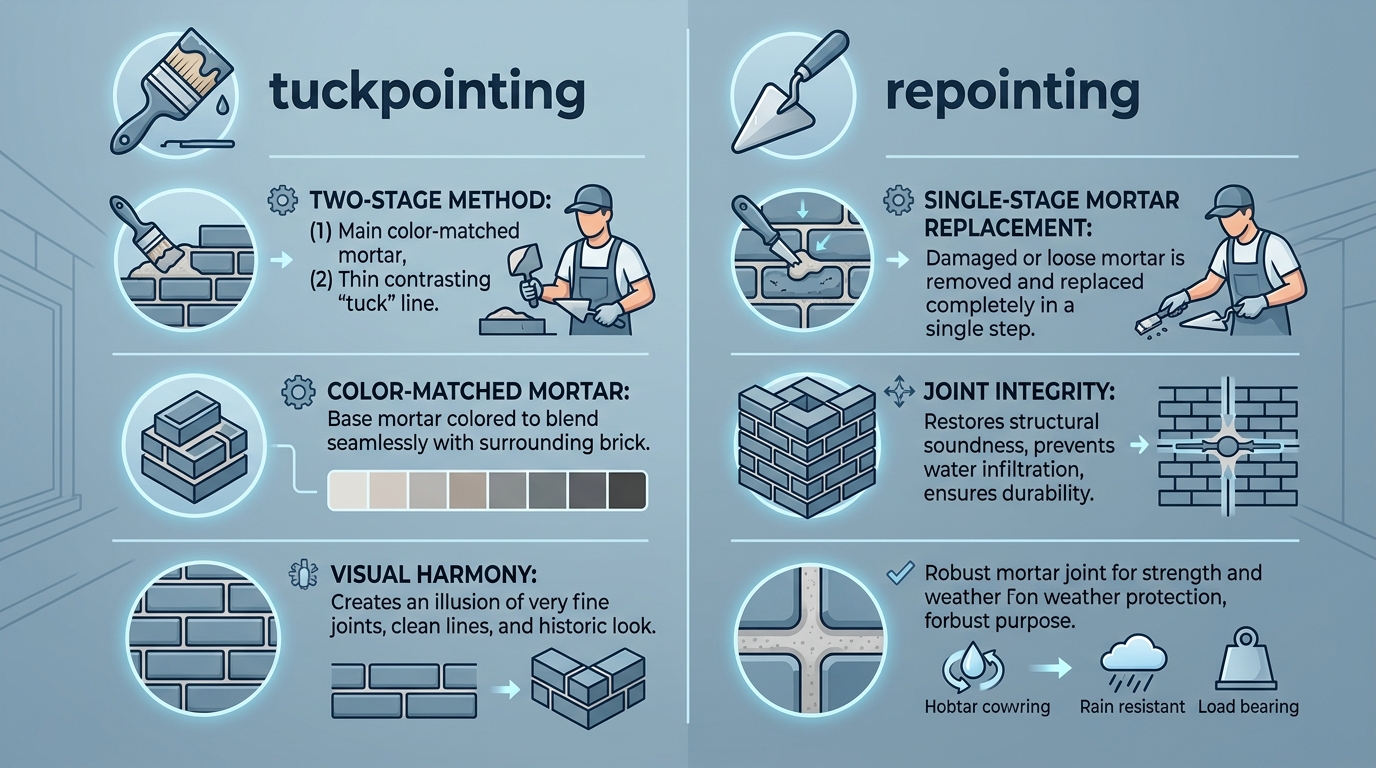
Chimney tuckpointing versus repointing comparison infographic
This visual comparison underscores how tuckpointing and repointing serve distinct roles in chimney care. We aim to enhance the appearance and improve the integrity of your house or building. B&G Tuckpointing serves residential and commercial customers nationwide, and we offer in-house financing to make chimney restoration accessible for any budget. With two decades of masonry experience, our crew delivers durable, color-matched results that protect your chimney for years. Request your free on-site assessment or photo-based remote quote today. Get a Quote. Next, we’ll explore the step-by-step process of professional chimney tuckpointing so you know exactly what to expect when you work with our team.
Cost, Longevity, and Causes of Chimney Masonry Deterioration
Once you’ve spotted warning signs like cracked mortar or leaning brick, understanding the costs, lifespan, and causes of chimney masonry deterioration helps you plan the right repair. At B&G Tuckpointing, our mission is to provide residential and commercial customers with an outstanding level of service, and we believe informed homeowners make the best decisions for their property’s safety and appearance.
The following table outlines the most common causes of chimney deterioration, their telltale symptoms, and how you can prevent them. For accurate cost estimates, we always recommend a custom assessment because every chimney is unique.
| Cause | Symptoms | Typical Cost to Repair | Prevention |
|---|---|---|---|
| Freeze-thaw cycles | Cracked mortar, spalling brick faces, efflorescence | $500-$1,200 (spot tuckpointing) | Waterproofing, proper flashing maintenance |
| Old age / mortar erosion | Crumbling mortar joints, loose bricks, chimney leaning | $1,000-$3,000 (full repoint for average chimney) | Annual inspection, timely tuckpointing |
| Water intrusion from crown or cap | Interior dampness, rusted damper, soft mortar at top | $300-$800 (crown repair) + tuckpointing if needed | Replace cracked crown, install chimney cap |
| Poor original construction (soft mortar on hard brick) | Rapid mortar erosion, spalled brick corners, bulging sections | $2,000-$5,000 (rebuild or extensive repoint) | Professional repoint using compatible Type N mortar |
As you can see, many prevention strategies align with our core services, from waterproofing to crown repair and tuckpointing.
Cost of Chimney Tuckpointing vs. Repointing
If you’re researching chimney tuckpointing costs, you’ll quickly find that no two jobs are the same. We price our tuckpointing and chimney repointing projects based on chimney height, roof accessibility, and the extent of mortar deterioration. Because spot tuckpointing addresses only the most damaged joints while a full repoint replaces mortar across the entire chimney, the scope of work directly influences the final figure. Full repointing is more extensive and typically requires a custom quote after an on-site or photo‑based evaluation.
Across the country, B&G Tuckpointing provides residential and commercial masonry repair, and we’re proud to offer in‑house financing that makes larger restoration projects manageable. To receive a personalized tuckpointing contact and quote, simply submit photos through our online portal or schedule an on‑site assessment. We don’t give generic over‑the‑phone estimates because every chimney’s condition is unique.
Longevity of Tuckpointing and Repointing
How long does tuckpointing last? The lifespan of your chimney repointing depends on several factors, including climate, the quality of materials used, and how well you maintain the chimney over time. When a professional uses compatible mortar–such as the Type N blend recommended by the Brick Industry Association–and you follow a routine of annual inspections and breathable waterproofing, the repair can remain effective for 15 to 25 years. With B&G’s quality workmanship and recommended maintenance, your tuckpointing can last for decades. We work hard to ensure that every mortar joint we restore resists water intrusion and withstands seasonal temperature swings.
Brick Spalling: Causes and Structural Implications
Spalling bricks–those flaking, chipping surfaces you may see on a chimney–often start as a cosmetic nuisance, but they can signal deeper structural trouble. The Brick Industry Association points to freeze‑thaw cycles, moisture trapped behind the brick, and the use of hard mortar on soft historic brick as primary drivers of brick deterioration. Surface spalling, where small flakes of brick come loose, usually presents only an appearance issue. However, when brick faces are missing or mortar joints are deeply cracked, the chimney’s structural integrity is at risk and requires immediate repointing or rebuilding.
We aim to enhance the appearance and improve the integrity of your house or building. Prevention starts with a properly installed chimney cap, routine crown maintenance, and a breathable waterproofing treatment. Equally important is matching mortar hardness to the original brick; using Type N mortar, as advised by the Brick Industry Association, allows the wall to breathe and move naturally without forcing moisture out through the brick faces.
If you suspect structural spalling, it’s crucial to schedule a professional repointing or rebuilding estimate promptly. Now that you understand what causes deterioration and how long repairs last, let’s walk through the tuckpointing process step‑by‑step.
Step-by-Step Process and Professional vs. DIY Considerations
Now that you understand why chimney tuckpointing is essential for protecting your chimney, here is how professionals approach the job and what you can expect if you decide to hire an expert. We’ll also compare the professional method to a do‑it‑yourself attempt so you can make an informed choice.
Step 1: Inspection and Old Mortar Removal
We begin every chimney repointing project with a thorough visual inspection to assess mortar condition and identify any spalling bricks that show signs of moisture damage. According to the Brick Industry Association (BIA), proper mortar joint restoration requires removing old material to a depth of â… to 1 inch. Our technicians use a 4‑inch angle grinder with a diamond blade or a sharp masonry chisel to cut out the deteriorated mortar without chipping the surrounding brick. As we work, we note any bricks that are cracked or flaking so they can be replaced later–using mortar that is slightly more porous than the brick itself to prevent pressure‑induced damage. Dust containment and fall protection gear are standard on every job, keeping your property clean and our crew safe while we prep the joints for fresh mortar.
Step 2: Color-Matched Mortar Application
Achieving a seamless look starts with precise color matching. We mix dry pigments–commonly iron oxide and carbon black–into a Type N mortar base until the shade blends perfectly with your existing brickwork. Next we trowel a flexible backing layer into the full joint depth (â… to ½ inch) to create a strong, void‑free bond. The real art comes when we apply the thin top strip, only 1/16 to 1/8 inch thick, that defines the crisp, classic line of tuckpointed masonry. Professionals perform solid tuckpointing by pressing this finish coat firmly into the joint and then tooling it for a weather‑resistant profile. Our custom color‑matching system ensures that the final result blends so naturally you’ll have trouble telling where the old mortar ends and the new mortar begins.
Step 3: Professional Finishing and Curing
Once the mortar has been tooled with a convex jointer to shed water, we lightly brush the joints after about 20 minutes to remove any surface smear and leave behind clean, even lines. A full curing period of 24 to 48 hours in low‑humidity conditions allows the repair to reach maximum strength–rushing this step can lead to cracking and premature failure. As a final protective measure, we apply a breathable silane/siloxane waterproofing sealant that repels moisture while allowing the chimney to release any trapped vapor. This step, recommended by BIA technical notes, dramatically extends the life of the tuckpointing work and is backed by our 5‑year warranty. The result is a chimney that not only looks restored but also stands up to years of freeze‑thaw cycles.
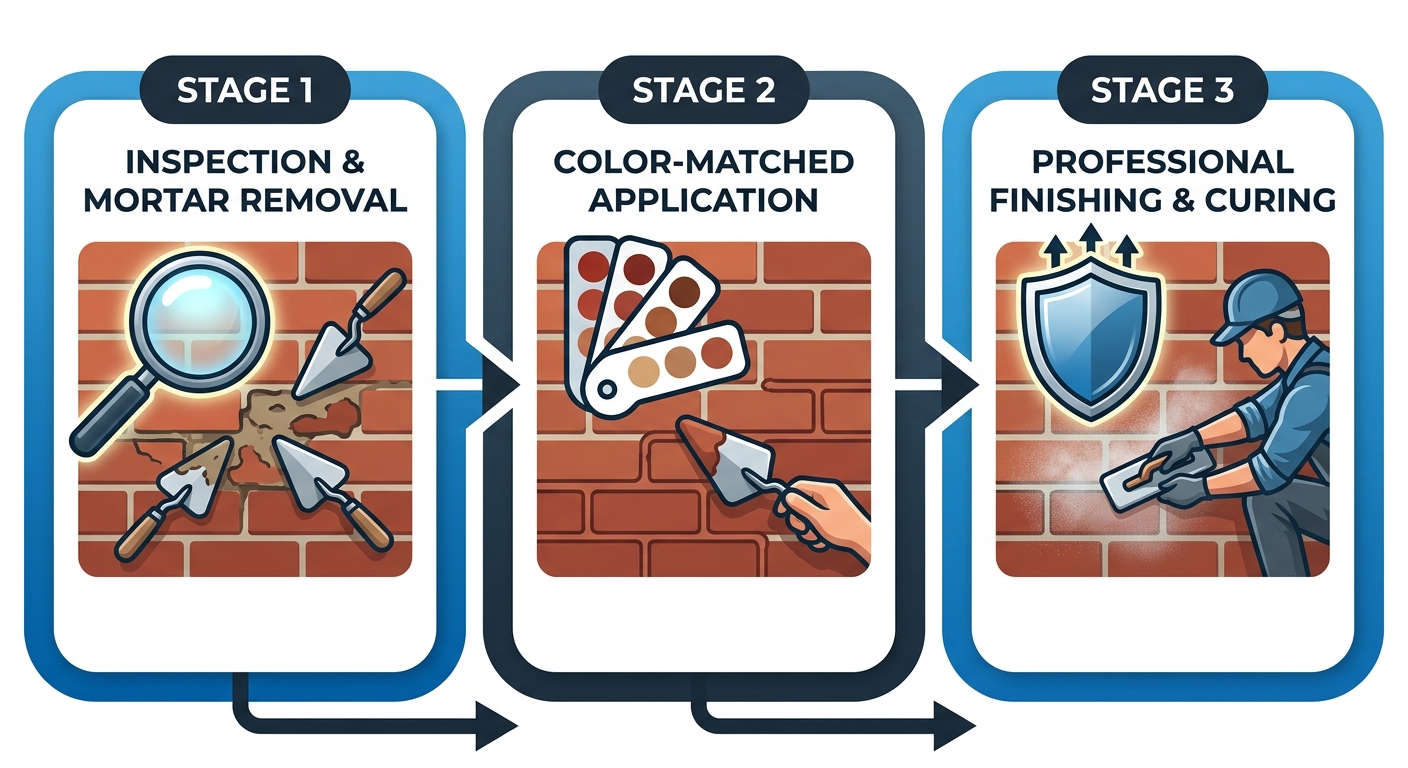
Professional tuckpointing process flow
Understanding each stage helps you appreciate the skill involved–and why the decision between doing it yourself or hiring a pro deserves careful thought. The table below breaks down the key factors.
| Factor | DIY Tuckpointing | Professional Tuckpointing |
|---|---|---|
| Skill Level | Intermediate to advanced masonry skills needed | Experienced mason with 10+ years of mortar matching |
| Required Tools | Grinder, chisel, tuckpointer, color pigments, mixing tools ($200-$500 investment) | Professional-grade grinders, custom color matching system, scaffolding, dust control |
| Time for Average Chimney | 1-3 weekends (including learning curve) | 2-4 days with a crew |
| Materials Cost | $50-$200 (mortar, pigments, bonding agent) | $300-$800 (included in estimate) |
| Quality & Durability | Variable; may crack or discolor if mortar type or curing is incorrect | Consistent, code-compliant; backed by warranty |
| Risk of Damage | High – can chip bricks, use mortar too hard, or damage flashing | Low – technicians protect surrounding masonry and waterproof properly |
The contrast is clear: professional chimney tuckpointing delivers consistent, long‑lasting results while removing the guesswork and physical risk. Our team’s mission is to provide residential and commercial customers with an outstanding level of service–whether it’s a single chimney or an entire building envelope. With nationwide coverage, in‑house financing, and free photo‑based estimates, getting your project started is straightforward. Understanding the process puts you in control; the next section walks you through requesting a custom quote. Contact us today to Get A Quote for your chimney tuckpointing project.
Preventing Water Damage and Maintaining Chimney Integrity
Water is the silent enemy of brick chimneys, and the most effective way to prevent costly damage is investing in chimney tuckpointing. Even well-built brickwork gradually succumbs to the freeze-thaw cycles that push moisture deep into the structure, but proactive mortar joint repair stops water before it can do harm.
A chimney’s mortar joints act as a shield, channeling rainwater away from the bricks. Over time, weather, temperature swings, and simple aging cause mortar to crack, crumble, or erode. These tiny gaps become pathways for water to seep inside, where it leads to spalling bricks–the flaking and breaking off of brick faces. For chimney repointing, the Brick Industry Association recommends inspecting mortar joints regularly and performing tuckpointing every 10-15 years to maintain a watertight seal. By refreshing worn mortar before leaks appear, you preserve the chimney’s structural integrity and avoid the hidden rot that can spread into the home’s framing.
The chart below contrasts preventative tuckpointing with reactive repairs to highlight the long-term benefits.
| Approach | Cost Range | Chimney Lifespan Impact | Water Damage Risk | Best Timing |
|---|---|---|---|---|
| Preventative tuckpointing (every 10-15 years) | $800-$2,500 per session | Extends life by 20+ years | Low – seals joints before moisture penetrates | After any signs of joint wear or at chimney inspection |
| Reactive tuckpointing after leaks or spalling | $1,500-$5,000 (repairs + possible brick replacement) | May only add 5-10 years if core damage exists | High – existing moisture may have caused hidden rot | Immediately upon noticing water stains, spalling, or crumbling mortar |
This comparison makes one thing clear: preventative tuckpointing not only costs significantly less in the long run but also drastically reduces the risk of ongoing water damage. While reactive repairs can fix immediate problems, they often address damage that has already progressed beyond the surface–potentially leading to more extensive brick replacement and interior repairs. A proactive approach gives your chimney a 20-plus-year lifespan extension, protects interior spaces from mold and rot, and keeps the chimney’s appearance clean and even.
At B&G Tuckpointing, we aim to enhance the appearance and improve the integrity of your house or building. Tuckpointing that catches wear early is one of the simplest ways to safeguard your chimney and maintain your home’s value. Homeowners in Illinois rely on our professional tuckpointing Illinois services to safeguard their chimneys from moisture damage. Schedule a chimney inspection with us today, and we’ll help you identify early signs of joint wear so you can protect your home for decades to come.
Common Questions About Chimney Tuckpointing Answered
Now let’s answer the most common questions homeowners have about chimney tuckpointing.
What is chimney tuckpointing, and how often is it needed?
Chimney tuckpointing involves removing deteriorated mortar joints and replacing them, not a full rebuild. According to the Brick Industry Association, chimneys typically need this service every 20-30 years, though harsh weather can shorten that lifespan. Unlike a full rebuild, tuckpointing restores integrity without replacing bricks.
What are the signs my chimney needs tuckpointing?
Look for crumbling mortar, spalling bricks, white efflorescence, or interior water stains. Timely chimney repointing prevents costly structural damage and extends chimney life.
What if I manage a commercial building or apartment complex?
We at B&G offer commercial tuckpointing services for apartment buildings and businesses, enhancing the appearance and improving the integrity of your chimney. With nationwide service and in-house financing, contact us for a free estimate.
Protect Your Chimney with Expert Tuckpointing Services
Our chimney tuckpointing in St. Louis service repairs deteriorated mortar joints–not bricks–sealing out moisture and preventing freeze-thaw damage. Neglected mortar joints cause spalling bricks and structural risks. Professional mortar joint restoration (or chimney repointing) extends chimney life by decades and is far more cost-effective than a full rebuild. B&G Tuckpointing’s mission is to provide outstanding service to residential and commercial clients. Our Brick Industry Association-approved process–careful mortar removal, color-matched mortar, and proper compaction–enhances the appearance and improves the integrity of your house or building, backed by nationwide reach and in-house financing.