
Table of Contents
Understanding Stair Brick Repair for Your Home
Stair brick repair is the process of restoring mortar joints and replacing damaged bricks on exterior staircases. Over time, freeze-thaw cycles, water infiltration, and heavy use can cause cracks and crumbling mortar, compromising both safety and curb appeal. We believe understanding these issues is the first step toward a durable, beautiful home entrance.
Freeze-thaw cycles and moisture infiltration cause mortar to deteriorate, while daily foot traffic stresses loose bricks. That’s why professional tuckpointing brick steps in St. Louis is so important–it removes old mortar and packs fresh, matching mortar into the joints, reinforcing the structure and preventing further damage.
Proper repointing brick stairs not only strengthens the masonry but also restores its original appearance. Our team carefully matches mortar color, texture, and strength, ensuring the repair blends seamlessly. Treating small cracks early keeps your staircase safe and extends its lifespan, avoiding the need for a full rebuild.
The International Masonry Institute and the Brick Industry Association provide industry standards for masonry repair, and we follow their technical guidelines to deliver lasting results. For residents in the St. Louis area, B&G provides expert brick repair St Louis, ensuring your stairs are restored to their best condition. We aim to enhance the appearance and improve the integrity of your house or building. Reach out today to get a quote.
Repointing vs. Tuckpointing: What Your Brick Stairs Need
If your brick stairs are showing signs of age, you might be looking for stair brick repair–but the right fix starts with knowing whether you need repointing or tuckpointing. Repointing removes damaged mortar to restore structural integrity, while tuckpointing adds a cosmetic line over sound mortar. For stairs, this distinction is critical.
When your brick stairs show crumbling or missing mortar deeper than half an inch, repointing for your brick stairs is the only safe solution. Because your steps endure constant foot traffic and weather, loose bricks demand a structural fix first. We carefully grind out damaged mortar and replace it with fresh material matched to your brick’s composition and color. According to the Brick Industry Association (BIA), Type N or S mortar is ideal for exterior stairs exposed to moisture and temperature swings, providing both strength and flexibility. The International Code Council (ICC) also stipulates minimum joint thickness and proper curing to ensure code-compliant, durable repairs. This thorough process locks bricks firmly in place and prevents water damage that could undermine your foundation.
If your brick steps have intact mortar but you want a more uniform or decorative finish, tuckpointing on your brick steps is the answer. In tuckpointing, we apply a thin contrasting line of mortar over sound joints to create crisp, visually defined lines. This cosmetic technique is ideal for stairs that are structurally solid but look worn or dated. We match the new mortar to your brick’s color–or you can choose a contrasting shade for a more dramatic effect. Because tuckpointing doesn’t involve removing deep mortar, it’s a faster, more affordable process. However, it’s not a substitute for needed structural repair; if your stairs have loose bricks or deep missing mortar, skip tuckpointing and address repointing first.
So which method does your brick staircase need? If you see crumbling, missing, or recessed mortar joints–or if any bricks feel loose–repointing for your brick stairs is the safe, lasting fix. For stairs with solid mortar but worn surfaces, tuckpointing on your brick steps will restore curb appeal. At B&G Tuckpointing, we provide both services and custom assessments tailored to your home’s needs. B&G’s mission is to provide residential and commercial customers with an outstanding level of service. We Service Tuckpointing Clients Nationwide & Offer In-House Financing!
Once you know which repair your stairs need, search for brick repair near me and request your professional assessment.
How Water Damage and Settlement Compromise Brick Stair Safety
Understanding stair brick repair begins with recognizing how water and settlement cause damage. Now that you know the common signs, let’s explore the underlying causes that compromise the safety of your brick stairs.
Recognizing Early Signs of Water Infiltration
Cracked mortar, whether horizontal or vertical, often indicates repeated stress from temperature changes. Loose or flaking bricks signal water absorption that has begun to weaken the brick face. Dark water staining beneath the step nose points to chronic moisture pooling that can eventually erode the masonry.
In St. Louis, winter freeze-thaw cycles cause water trapped in mortar to expand, forcing cracks wider and accelerating spalling. If you notice any of these issues, professional brick restoration St Louis is essential to prevent further damage. The table below categorizes common damage signs by cause and severity.
| Damage Sign | Likely Cause | Severity (Low/Med/High) | Recommended Repair |
|---|---|---|---|
| Hairline cracks in mortar | Normal aging / weather | Low | Repointing |
| Spalling / flaking bricks | Freeze-thaw cycles / water absorption | Medium | Tuckpointing + brick replacement |
| Uneven or settled steps | Foundation movement / poor subbase | High | Partial rebuild / slab raising |
| White powdery residue (efflorescence) | Moisture moving through masonry | Low-Medium | Cleaning + waterproofing |
Spalling often indicates trapped moisture that has penetrated the brick face. Repeated freeze-thaw cycles create internal pressure that pops off brick surfaces. In many cases, damaged bricks must be replaced before proper tuckpointing can restore the stair’s strength. Early detection reduces repair cost and preserves the original look of your brick stairs.
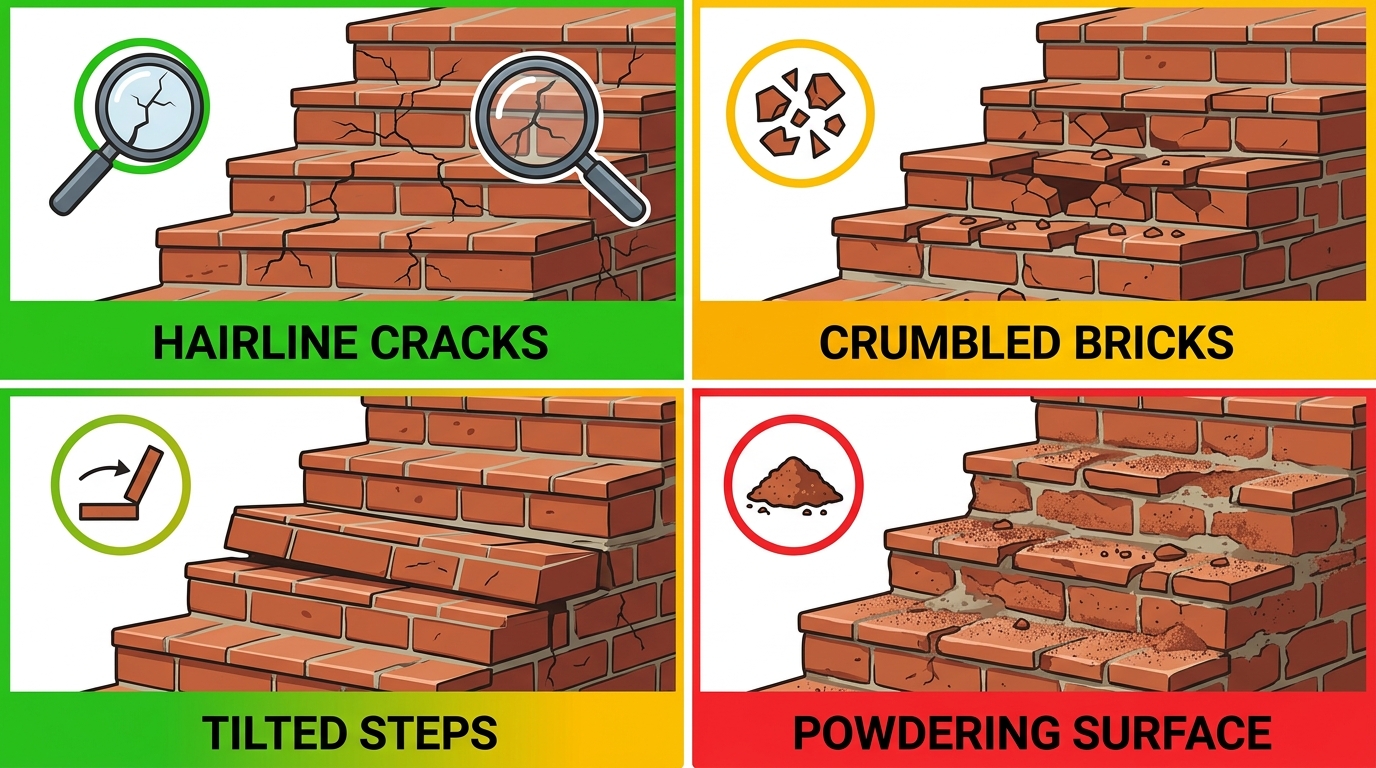
Brick stair damage types and severity guide.
While water damage is a primary culprit, uneven settlement creates an entirely different set of hazards.
How Uneven Settlement Leads to Structural Gaps
Differential settlement occurs when the soil or subbase beneath brick stairs compacts unevenly or erodes due to poor drainage. According to the International Code Council (ICC), even a ¼-inch gap between steps can create a tripping hazard under building codes. As the ground shifts, steps can tilt, separate from the adjacent structure, or develop wide cracks that collect water and accelerate deterioration.
For these situations, tuckpointing brick steps helps realign and stabilize the structure while replacing the damaged mortar. When the subbase has failed completely, a partial rebuild is necessary–our team removes the affected bricks, recompacts the base material, and relays the steps to match the original design. This approach ensures a stable, level walking surface without replacing the entire staircase.
The Connection Between Moisture and Mortar Deterioration
Moisture does more than just stain brick stairs–it weakens the mortar chemically. When water seeps into the joints, it dissolves calcium hydroxide, which later migrates to the surface and forms the white powdery residue known as efflorescence. Over time, repeated freeze-thaw cycles in St. Louis’s wet winters cause mortar to spall, or flake off, reducing the bond strength that holds bricks together. As the mortar erodes, bricks can shift under foot traffic, creating a serious safety risk.
Repointing brick stairs removes the deteriorated mortar and replaces it with fresh, color-matched material that restores bond strength. After the repair, waterproofing is critical to prevent moisture from re-entering the joints. The International Masonry Institute (IMI) recommends thorough sealant application on brick stair assemblies, especially in climates with humid summers and icy winters. Properly applied waterproofing protects the new mortar from efflorescence and future damage.
At B&G Tuckpointing, our two decades of experience in St. Louis masonry ensure that every repointing and waterproofing project enhances the appearance and improves the integrity of your house or building. We offer nationwide service with in-house financing–contact us for a quote to keep your brick stairs safe and beautiful for years to come.
The Professional Process for Residential Brick Stair Repair
When it comes to stair brick repair, proper technique makes all the difference. At B&G Tuckpointing, we follow a methodical four-step process that restores both strength and appearance to your brick steps.
Step 1: On-Site Assessment and Mortar Matching
We start every project with a thorough on-site inspection of the brick stairs. Using a hammer to perform sounding tests, we listen for hollow or loose areas that signal deeper damage. Mortar samples are taken and analyzed to match the color, texture, and composition of the original mix – a critical step for achieving a seamless finish. For cases where bricks themselves are crumbling or spalled, we may recommend our brick rebuilding services to ensure structural safety. Even before scheduling a visit, homeowners can get a fast, no-obligation quote through our remote estimate portal – simply upload photos. That way, your stair brick repair assessment begins right from your phone.
Step 2: Mortar Removal and Joint Preparation
After the assessment, we carefully remove all deteriorated mortar using an angle grinder equipped with a dust-collection shroud. According to International Masonry Institute standards, old mortar should be removed to a depth of at least 1 inch (2.5 cm) to ensure proper bonding. This precise grinding removes all loose material while protecting the surrounding brick. To further control dust, our crews periodically mist the work area with water, keeping the air clear for both workers and the neighborhood. The result is a clean, uniformly raked joint ready to accept fresh mortar that will lock the steps together for years.
Before we apply new mortar, it’s helpful to understand two main techniques for stair restoration: repointing and tuckpointing. When repointing brick stairs, the deteriorated joints are refilled with new mortar for structural strength, while tuckpointing adds an extra color-matched accent line for a historically accurate appearance. Both methods extend the life of your brick steps, but they serve different visual and structural needs.
| Aspect | Repointing | Tuckpointing |
|---|---|---|
| Technique | Remove old mortar, refill joints with new mortar | Apply colored base mortar, then a fine accent line |
| Best For | Deteriorated joints needing a structural fix | Historic stairs requiring color-matched aesthetics |
| Durability on Outdoor Steps | 10-15 years | 10-15 years with proper waterproofing |
| Aesthetic Match | Good, but limited color options | Excellent: precise color match to historic mortar |
| Typical Cost per Step (stair) | $$ – lower than tuckpointing | $$$ – higher due to artistry and materials |
Homeowners with century-old homes or those in historic districts often prefer tuckpointing for its ability to preserve the authentic look with razor-sharp mortar lines. Our color-matching specialists can replicate vintage mortar colors so the repair blends invisibly into the original work. No matter which method fits your stairs, we tailor our approach to deliver a durable, beautiful finish.
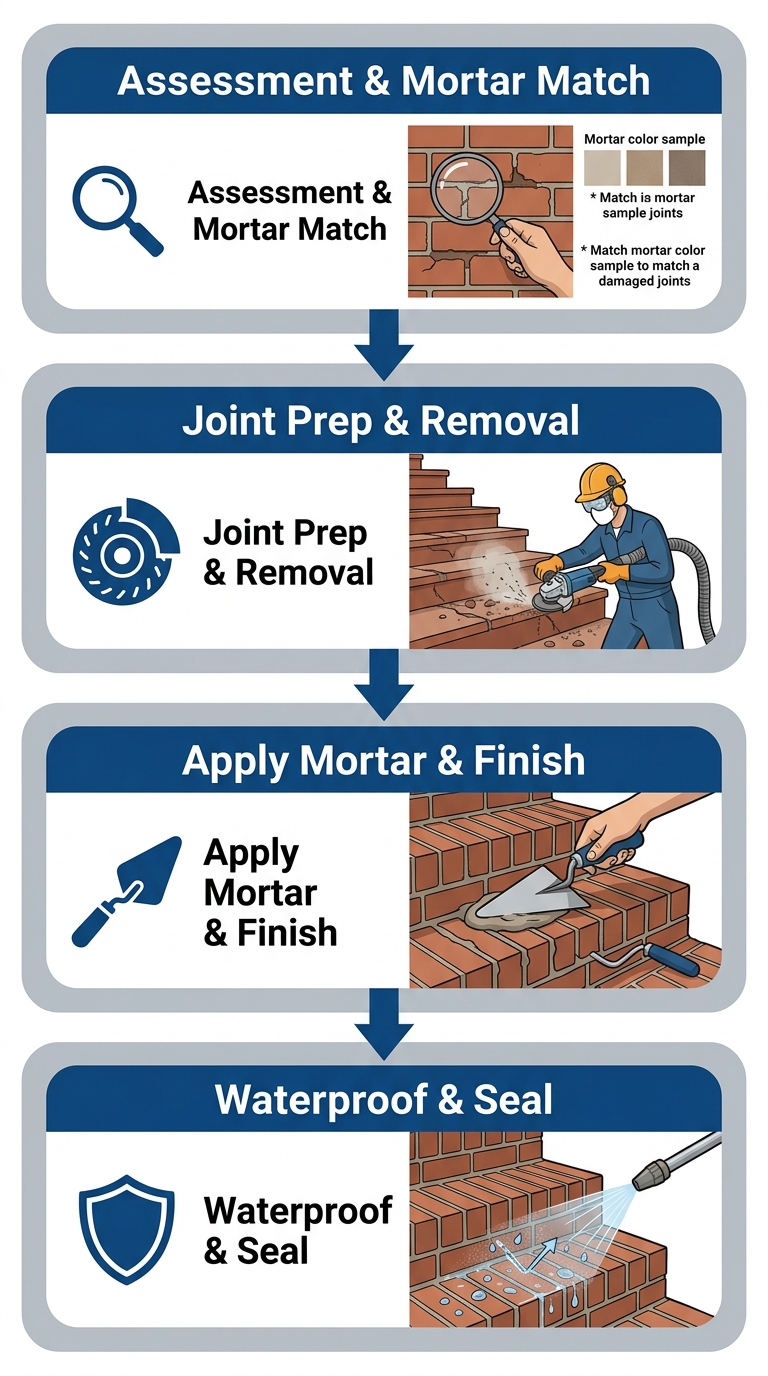
Brick stair repair process: assessment, removal, mortar application, and waterproofing.
With the joints properly prepared, we focus next on mixing and applying the new mortar to match the stair’s character.
Step 3: Applying New Mortar and Color Finishing
We mix the replacement mortar to a peanut-butter consistency – stiff enough to hold its shape but pliable enough to work into every crevice. Using pointing irons, we press mortar firmly into the joints, then tool them to a concave or weather-joint profile that naturally sheds water. For tuckpointing brick steps, we take extra care: a pigmented base coat fills the joint first, followed by a thin, contrasting accent line that replicates the original ribbon-joint appearance. This two-step color-matching technique ensures the stair brick repair looks crisp and authentic. The fresh mortar cures under controlled conditions, typically for 48 hours, before we move on to sealing.
Post-Repair Care and Waterproofing
Once the mortar has cured, we apply a breathable, silane/siloxane-based waterproofing sealant across all brick surfaces and joints. This invisible barrier repels rain and snow while still allowing moisture vapor to escape – critical for avoiding freeze-thaw spalling. We also caulk any gaps between the stair sides and adjacent walls with flexible masonry caulk to prevent water intrusion. To keep your investment in top shape, we recommend scheduling a quick annual inspection; minor touch-ups caught early can add years to your stair’s life. With a properly repaired stair, protecting your investment with routine inspections and waterproofing is the next logical step. It’s all part of how we aim to enhance the appearance and improve the integrity of your house or building – and we’re proud to service tuckpointing clients nationwide with in-house financing options.
Color Matching and Historic Preservation for Older Brick Stairs
Beyond structural integrity, preserving the original look of older brick stairs demands careful color matching and historic preservation techniques. For homes with original brickwork, standard stair brick repair can fall short if the new mortar starkly contrasts with the aged character of the original. We believe repairing a historic staircase should be invisible–blending seamlessly with the surrounding masonry.
Historic preservation guidelines from the Brick Industry Association (BIA) and local review boards call for compatible, breathable mortars that protect older brick. Modern Portland cement mortar is often too hard and impermeable for vintage brick, trapping moisture and causing spalling or cracking. By using breathable lime-based mortar and matching the original color and texture, we follow BIA standards to protect your staircase’s integrity for decades. This method also ensures the repair blends seamlessly with the existing masonry, preserving the home’s architectural authenticity.
Professional color matching starts with a mortar analysis. Our masons examine the original mortar’s pigment, sand gradation, and lime content to formulate a precise custom blend. When we perform tuckpointing brick steps on century-old properties, we recreate that exact hue, ensuring the repair is virtually undetectable. For historic brick stairs, we always use lime-based mortar (Type O or N), which is softer and more porous than modern mixes; it allows moisture to escape naturally, preventing spalling and extending the staircase’s life. This approach aligns with BIA technical notes for historic restoration.
Proper repointing brick stairs preserves the historic character of your home. We use spot tuckpointing with color matching to target only damaged joints, preserving as much original brick as possible. For homeowners in St. Louis working with century-old brick stairs, professional color matching ensures the repair blends seamlessly. With over two decades of masonry expertise, B&G Tuckpointing brings precision to every project. We aim to enhance the appearance and improve the integrity of your house or building. Contact us to Get A Quote. Similar attention to detail applies to your chimney–we also offer chimney repair St Louis services.
Frequently Asked Questions About Stair Brick Repair
If you still have questions, check out our FAQs below:
What are the most common stair brick repair signs?
Cracks, spalling, and mortar deterioration often signal damage. One common issue is brick mortar falling out, which we can address through our tuckpointing services in St. Louis and nationwide. Prompt inspection prevents further structural problems.
What’s the difference between tuckpointing brick steps and repointing brick stairs?
Repointing removes and replaces damaged mortar, while tuckpointing adds a fine colored line for a refined cosmetic match. We offer both methods to restore your brick stairs safely and beautifully.
How long does stair brick repair last?
With quality materials and expert application, stair brick repair can last decades when properly maintained. Regular inspections and waterproofing help extend its life.
We Service Tuckpointing Clients Nationwide & Offer In-House Financing! Get A Quote today to discuss your project.
Protect Your Investment with Timely Brick Stair Maintenance
Regular stair brick repair protects your investment in curb appeal and safety. Brick stairs face heavy use and weather, so cracks quickly lead to water damage. Delaying care invites freeze-thaw cycles that loosen bricks and create hazards, ultimately costing far more in replacement. Timely tuckpointing brick steps and repointing brick stairs stops moisture intrusion early, saving you from major repairs. Our spot tuckpointing and waterproofing preserve your stairs because our mission is to provide residential and commercial customers with an outstanding level of service. Get A Quote today.