
Table of Contents
Recognizing When Your House Needs Tuckpointing
But how can you tell when does your house need tuckpointing? The signs are often visible if you know what to look for. Inspect the mortar joints in your brickwork for any crumbling, cracking, or missing sections. Loose or spalling bricks are another clear indicator, as degraded mortar can no longer hold them securely in place. You might also notice white, powdery efflorescence on your walls or damp spots on interior surfaces, which suggest water is finding its way through failing mortar. Don’t forget chimneys, where exposure makes mortar especially vulnerable to rapid deterioration. If your joints are recessed more than a quarter-inch or the mortar is over 25 years old, repointing is likely overdue.
If you notice any of these issues, it’s time to consider professional help. Contact B&G Tuckpointing for expert b&g tuckpointing services and a free, custom quote. We Service Tuckpointing Clients Nationwide & Offer In-House Financing!
Common Signs That Indicate Your House Needs Tuckpointing
Wondering when does my house need tuckpointing? Recognizing the early warning signs can save you from costly structural damage down the road. Masonry professionals, including experts at Hicon Inc., point to several clear indicators that mortar joints are failing and need attention. Here in St. Louis–where freeze-thaw cycles are particularly harsh–these signs often appear more quickly and should never be ignored.
One of the most obvious brick damage indicators is crumbling mortar joints. If you can scrape mortar away easily with a screwdriver, the joint has lost its strength and must be repointed. Similarly, brick spalling symptoms–where the brick face flakes, chips, or cracks–signal that moisture has penetrated the surface and is causing the brick to deteriorate from within. Unlike normal weathering, spalling exposes the softer inner brick and speeds up decay, leaving your walls vulnerable to further water intrusion. You may also notice sunken mortar joints–where the mortar sits lower than the brick surface–a sign of advanced erosion that compromises the wall’s structural integrity.
These visible signs are often just the beginning–more subtle clues can indicate that moisture is already working its way deeper into your walls.
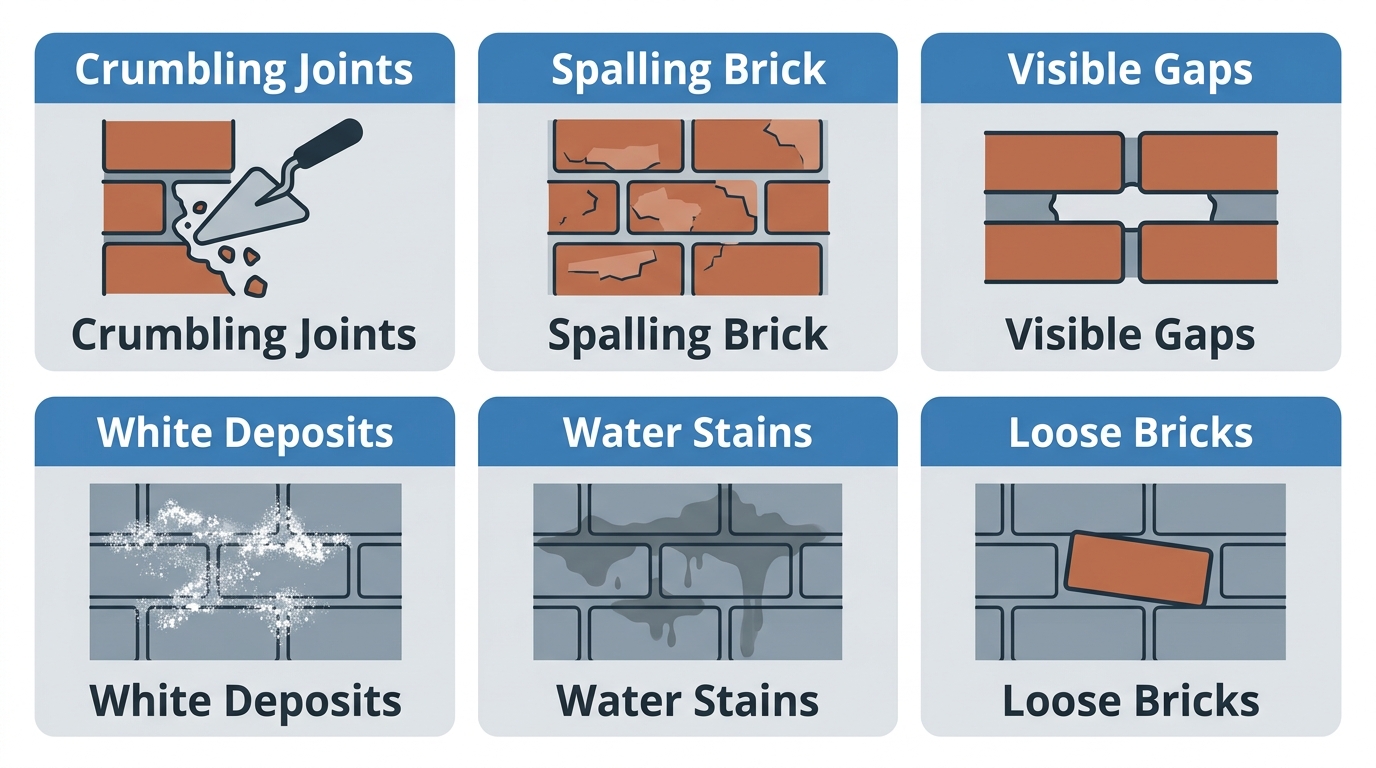
Six visual signs your house needs tuckpointing repair
Beyond these visible exterior clues, you might notice compromised joints where mortar has pulled away from adjacent bricks, leaving small gaps that let rain and melting snow seep into the wall. Over time, these gaps widen and can cause loose or shifting bricks–a clear warning sign of masonry failure. Another hidden signal is efflorescence: that white, powdery residue on brick surfaces that forms when moisture moves through deteriorating mortar and evaporates. Indoors, watch for damp patches, mold, or musty odors that point to water making its way through your exterior walls. In freeze-thaw climates like St. Louis, trapped moisture expands when frozen and quickly turns minor gaps into major structural threats.
If any of these signs sound familiar, our team at B&G Tuckpointing can help. For isolated problem areas, our spot tuckpointing color matching restores appearance and strength without a full repoint. We aim to enhance the appearance and improve the integrity of your house or building. To request a personalized inspection, simply Get A Quote through our website. Our next section explains how professional tuckpointing can restore your walls and protect them for years to come.
How Often Should You Inspect Your Brickwork for Tuckpointing Needs?
You might ask yourself when does my house need tuckpointing–regular inspections give you the answer. Brick mortar naturally weathers over time, and waiting until you see obvious damage can lead to expensive repairs. With a professional inspection schedule, you’ll catch problems early and protect your home’s structure.
We recommend inspecting your brickwork at least once a year, ideally every spring after the freeze-thaw season has passed. If your home is over 20 years old, plan for semi-annual checks–in spring and fall–because aging mortar is more susceptible to deterioration. Additional inspections should follow severe weather events like heavy rain, hailstorms, or sudden temperature swings, which can accelerate mortar decay. As a helpful habit, keep a simple inspection log to track changes year over year.
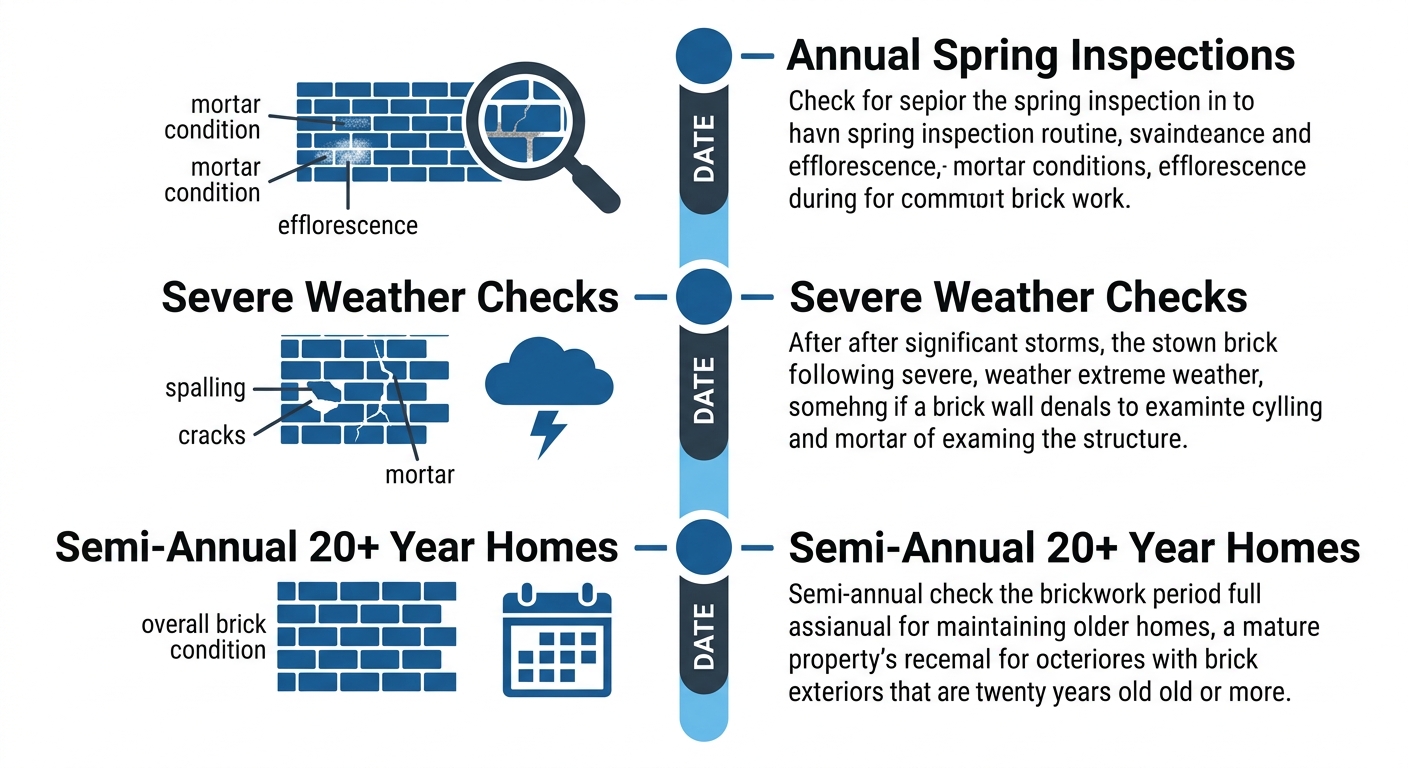
Vertical timeline of brickwork inspection schedule
Regular visual checks help you identify early warning signs. Here are the specific indicators that your brickwork may need professional attention:
- Crumbling mortar joints that leave gaps between bricks
- Brick spalling symptoms such as flaking, chipping, or spalling brick faces
- Visible cracks in the mortar or bricks
- White, powdery efflorescence indicating moisture intrusion
- Water damage or staining around windows, doors, and lintels
Spotting these issues early can extend the life of your masonry and significantly reduce the cost of repairs–often eliminating the need for a full rebuild. If you notice any of these signs, schedule an inspection with a trusted St Louis tuckpointing company like B&G Tuckpointing. Our team combines over a decade of masonry experience with in-house financing to make your restoration project straightforward. We aim to enhance the appearance and improve the integrity of your house or building. We Service Tuckpointing Clients Nationwide & Offer In-House Financing! Get a quote today and start your inspection schedule with confidence.
Minor Mortar Wear vs. Professional Tuckpointing: How to Decide
You’ve noticed some cracked or crumbling mortar on your brickwork, and now you’re asking yourself, “When does my house need tuckpointing?” That is a great question. Understanding the difference between minor, cosmetic wear and damage that requires professional attention can save you money, stress, and larger structural issues down the road. At B&G Tuckpointing, we help homeowners make this exact call every day.
Minor mortar wear looks like tightly hairline cracks, typically less than an eighth of an inch wide and limited to just a few isolated joints. If the surrounding bricks are solid, there is no water seeping into your interior walls, and you cannot easily pick out the mortar with a flathead screwdriver, you are likely looking at a surface-level concern. In these cases, a simple sealant or very limited patching might be sufficient. However, we still recommend keeping a close eye on these spots. Small issues can quickly evolve into larger problems, especially when freeze-thaw cycles push moisture deeper into the wall.
The picture changes completely once you see signs of crumbling mortar joints or notice brick spalling symptoms. Spalling is that chipping, flaking, or peeling on the face of the brick itself, and it tells us the material is trapping destructive moisture. If you can scrape out mortar to a depth of a quarter inch or more, or if any bricks feel loose, these are definitive signals that you need a professional evaluation. Industry resources often use a simple rule of thumb: if more than twenty percent of any single wall’s joints show visible deterioration, the damage is beyond a do-it-yourself fix. At this stage, improper mortar mixes or incorrect application techniques can actually trap moisture and accelerate brick decay.
Here is a quick self-assessment checklist. If you answer yes to any of these points, it is time for a professional tuckpointing solution. Can you easily remove mortar to a depth of one-quarter inch or deeper? Do you see loose, spalling, or flaking bricks anywhere on the wall? Is water penetrating into your home near the brickwork? Does the mortar crumble and fall away when you run a tool across the joint? Did you find that more than twenty percent of a single wall’s mortar joints are compromised? Spot tuckpointing with a precise color match, one of our signature services, is the perfect middle ground when you have localized damage that needs a seamless, durable fix.
With over a decade of experience in St. Louis, MO, and serving property owners nationwide, we know that trusting your instincts is just as important as trusting the visual evidence. If your inspection turns up anything beyond the most superficial hairline cracks, we are here to help you protect your investment. Our team can match your existing mortar perfectly while addressing the root cause of the deterioration, not just the appearance. Submit a masonry quote request today, and we’ll provide a clear, honest assessment of what your brickwork really needs.
Understanding Crumbling Mortar Joints: Causes and Solutions
If you’ve noticed cracks, gaps, or a powdery residue between your bricks, you might be asking, “when does your house in St. Louis need tuckpointing?” The answer begins with recognizing the signs of crumbling mortar joints and understanding what causes this deterioration.
Crumbling mortar joints develop when the material binding your bricks loses strength over time. Freeze-thaw cycles, prolonged moisture exposure, age-related wear, and poor original mortar mix all contribute. Foundation settling can also stress the mortar, causing it to break apart. According to Hicon Inc., a respected masonry industry resource, these forces work together to weaken the joints and compromise the structural stability of your brickwork. Repeated freeze-thaw cycles in climates like St. Louis cause water within the mortar to freeze and expand, accelerating deterioration and making professional evaluation essential.
If you spot any of the following signs, your mortar may need attention:
- Cracks in mortar lines
- Crumbling or powdery residue on brick surfaces
- Water stains on interior walls near the affected area
- Gaps between bricks and mortar
- Loose or shifting bricks
Even small hairline cracks can allow water to seep in, leading to mortar failure over time. If you spot any of these warning signs, prompt action prevents more extensive damage. These brick spalling symptoms often signal deeper water intrusion and can accelerate brick deterioration itself. Left unaddressed, crumbling joints lead to severe damage–including brick spalling, water penetration, and potential structural failure–and ultimately higher repair costs.
The professional solution is tuckpointing, a process that removes damaged mortar and replaces it with fresh, color-matched mortar. While spot tuckpointing repairs only the worst areas, our recommended approach is solid tuckpointing, which restores every joint for uniform strength and long-term protection. Solid tuckpointing ensures a consistent appearance and long-lasting weather resistance, protecting your property from future freeze-thaw cycles, moisture penetration, and the costly cycle of deterioration. Our team can color-match the new mortar to your existing brick, maintaining your building’s historic or modern aesthetic.
With 20 years of masonry experience, our team at B&G Tuckpointing aims to enhance the appearance and improve the integrity of your house or building. As a nationwide provider, we offer in-house financing to make essential repairs accessible. Contact us today to get a quote for your tuckpointing needs. Once you identify these issues, the next step is professional repair–a topic we explore further in the following section.
Brick Spalling Symptoms: What Every Homeowner Should Know
Recognizing brick spalling symptoms early is the first step toward protecting your home from serious structural damage. Spalling occurs when moisture penetrates the brick surface, causing it to flake, chip, or peel away — often accelerated by freeze-thaw cycles we experience during seasonal temperature swings. What starts as a minor cosmetic concern can quickly progress into a costly repair if left unaddressed.
One of the most telling indicators of masonry damage is crumbling mortar joints between the bricks. When mortar degrades, it loses its ability to hold bricks securely in place, exposing the edges to moisture and weather. We often see this on walls facing prevailing winds or on chimney tops, where rain and snow have direct access. Left untreated, crumbling mortar allows water to seep deeper into the wall cavity, creating conditions for mold growth and rot that compromise your home’s structural integrity.
Another early warning sign is efflorescence — a white, powdery deposit that forms on the brick surface. While efflorescence alone does not confirm active spalling, it signals that water is moving through the masonry and evaporating at the surface, leaving salts behind. According to industry knowledge from HICON Inc., this moisture pathway is exactly what sets the stage for the freeze-thaw stress that triggers spalling, making efflorescence a signal worth investigating.
More advanced damage appears as horizontal cracking or bulging brick faces. These symptoms indicate that deteriorated mortar is no longer supporting the wall system properly. You might notice entire sections of brickwork pushing outward, particularly along lower courses where moisture collects and freezes most frequently. The risk is more than cosmetic — bulging brick can threaten load-bearing capacity and demand immediate professional attention.
If you’ve spotted any of these brick spalling symptoms on your property, it’s wise to seek expert evaluation before the damage spreads. While this article focuses on homes, commercial building owners should be equally vigilant. B&G Tuckpointing offers specialized commercial tuckpointing services to address spalling on larger structures with the same attention to detail we bring to residential projects. Once you’ve identified these warning signs, it’s time to explore your repair options.
Schedule a Professional Tuckpointing Assessment
If you’re wondering when your house needs tuckpointing, the most reliable answer starts with a professional assessment from B&G Tuckpointing. We offer free, no-obligation quotes for property owners in every state, so you can make informed decisions without any pressure.
Our experienced team thoroughly inspects mortar joints and brickwork for crumbling mortar joints and brick spalling symptoms–early warning signs of moisture damage that can compromise your building’s structure. With over 20 years of masonry expertise, we catch deterioration before it escalates and create a custom repair plan to maintain your home’s beauty and value. Detecting issues early prevents small problems from growing into large, budget-breaking repairs. Scheduling is fast and convenient: book your assessment online or give us a call, and know that we back qualified projects with in-house financing for extra peace of mind.
We Service Tuckpointing Clients Nationwide & Offer In-House Financing! Get A Quote today via our simple online form or by phone–our friendly team is ready to answer your questions and set up your appointment. We aim to enhance the appearance and improve the integrity of your house or building.