
Table of Contents
The Lifespan of Tuckpointing at a Glance
How long does tuckpointing last in St. Louis’s freeze-thaw climate? Quality tuckpointing, when expertly applied, typically lasts between 25 and 50 years, according to the Brick Industry Association. Several key factors determine where your project falls on that spectrum.
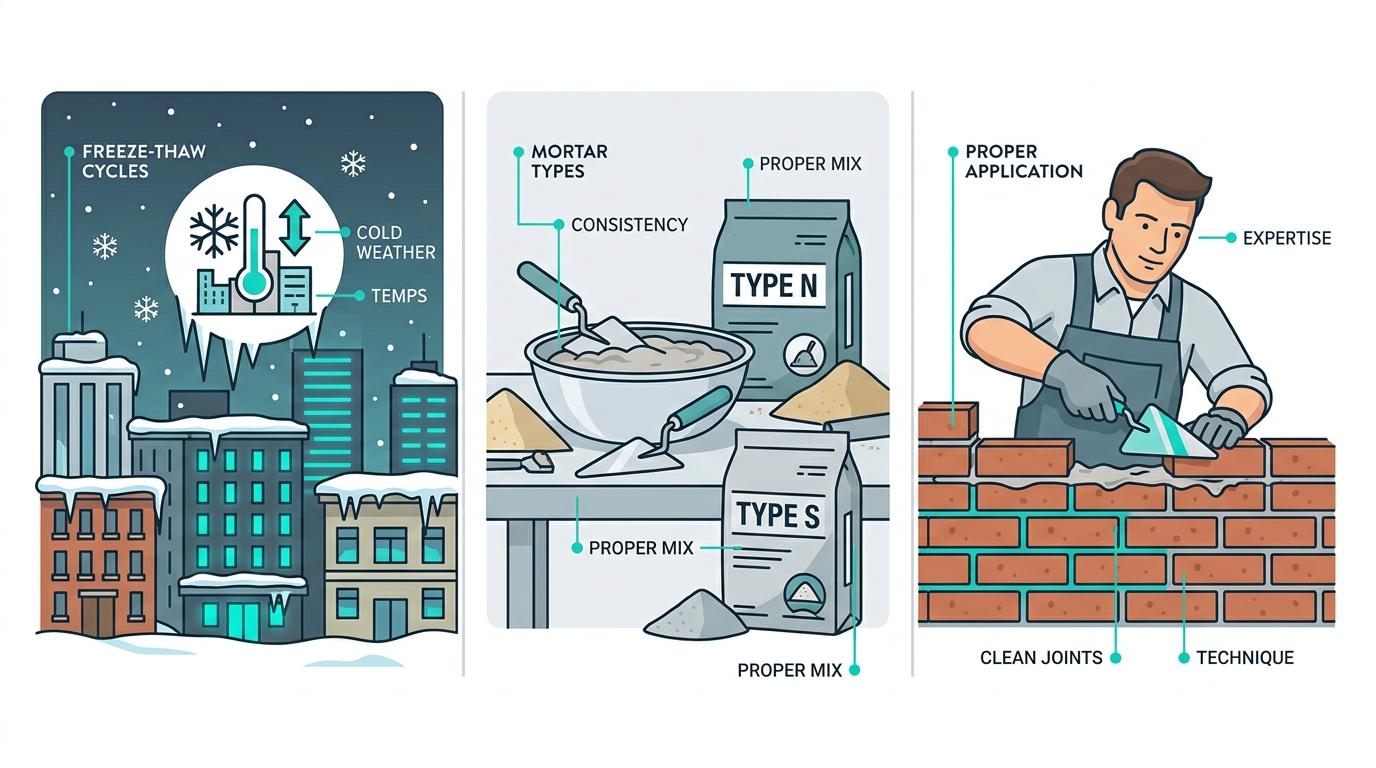
Quick visual guide to tuckpointing lifespan factors
In St. Louis’s climate, repeated freeze-thaw cycles cause mortar joint deterioration over time, gradually weakening the brickwork. Selecting the right mortar — Type N for most above-grade applications and Type S for below-grade or high-stress areas — is a cornerstone of brick repointing longevity. But material choice alone isn’t enough. Skilled craftsmanship makes all the difference: our masons remove old mortar to a depth of at least ¾-inch, pack the joints tightly, and carefully cure the new mortar to resist cracking. Annual visual inspections and addressing small cracks early can push a tuckpointing job’s lifespan to the upper reaches of that 25-to-50-year window. Preventive care extends the service life of repointed mortar and keeps brick joints strong for decades.
Understanding the lifespan of tuckpointing is a key first step — next we’ll explore factors that affect durability. For results that last, turn to our masonry services St. Louis team. Contact us today to schedule an inspection and learn how to maximize your brickwork’s longevity.
Typical Lifespan of Tuckpointing Work
So, how long does tuckpointing last? In our experience and according to industry standards, professional tuckpointing on a brick home or building typically endures 25 to 30 years. We’ve seen carefully executed projects using premium materials surpass the 30-year mark, especially in regions with mild weather. However, the actual longevity depends heavily on a handful of key factors that every property owner should understand.
Let’s break down the main elements that influence brick repointing longevity:
- Full vs. Spot Tuckpointing: A complete solid tuckpointing job–where all visible mortar joints are ground out and repointed–offers the greatest durability, typically 25-30 years or more. In contrast, spot tuckpointing, which targets only damaged areas, may need touch-ups within 10-15 years. So if you’re wondering how long does tuckpointing last for localized fixes, expecting a shorter lifespan is realistic.
- Climate and Weather: Climate is the single biggest factor we see affecting mortar joint deterioration. Because we serve clients nationwide, we see how conditions vary: in areas with frequent freeze-thaw cycles–like here in St. Louis, MO–water seeps into tiny cracks, freezes, and expands, gradually breaking down the mortar. In milder climates, the same tuckpointing work can easily reach or exceed the 30-year upper range.
- Mortar Type: Mortar mix matters. According to the Brick Industry Association’s technical guidelines, Type N mortar provides a good balance of strength and flexibility, making it a common choice for above-grade walls in residential construction. Type S mortar offers higher compressive strength and is often specified for foundations or severe-weather exposures, which can extend brick repointing longevity in demanding environments.
- Workmanship: The way we prepare and install the new mortar is just as critical as the materials. Our team always grinds out old mortar to the proper depth–typically ¾ inch–and ensures joints are clean before packing the new mortar in lifts. Adequate curing time (often several days, depending on weather) lets the mortar achieve its full bond and durability.
Beyond the initial installation, regular inspections play a big role in how long tuckpointing lasts. We recommend having a professional check your mortar joints every 5 to 10 years, even if you don’t notice obvious issues. Catching early mortar joint deterioration allows for minor spot repairs that can extend the life of the surrounding work by a decade or more.
While even the best tuckpointing won’t last forever, understanding these factors helps you make informed decisions about timing and scope. When performed correctly, tuckpointing can protect your building for decades and enhance the appearance and improve the integrity of your property. However, even the best work requires periodic inspections. Next, we discuss signs that your tuckpointing may need attention.
Key Factors That Determine Tuckpointing Lifespan
Now that we’ve introduced what tuckpointing is, let’s explore the three key factors that determine its lifespan. Understanding how long does tuckpointing last comes down to climate conditions, mortar type selection, and structural or environmental influences. We’ll examine each factor so you can assess brick repointing longevity and plan timely maintenance for your property.
Climate and Weather Effects
Freeze-thaw damage is the number one culprit in northern US climates, where winter temperatures routinely dip below freezing. Water seeps into tiny cracks, freezes, and expands, forcing mortar joints apart with each cycle. How long does tuckpointing last in a freeze-thaw climate depends heavily on exposure and drainage–even a single poorly drained wall section can trigger widespread joint failure in a zone like the Midwest.
In coastal environments, salt-laden air penetrates mortar pores and promotes chemical breakdown, while persistent humidity fosters mold and efflorescence. Likewise, regions with dramatic temperature swings–such as the desert Southwest–experience thermal expansion and contraction that slowly fatigues mortar over time. We’ve observed at B&G Tuckpointing that tuckpointing in these demanding conditions benefits from annual inspections to catch early signs of wear.
Mortar Type and Its Impact on Longevity
Selecting the right mortar is critical for brick repointing longevity. The Brick Industry Association sets industry standards for three common mortar types. Type N is a general-purpose mortar suitable for most residential above-grade walls. Type S offers higher compressive strength and is typically used in load-bearing or commercial applications. Type O is a low-strength mix designed for softer historic brick, where harder mortars would cause the brick to crack.
Using a mortar that is too hard for the existing brick–for example, Type S on a century-old home–can trap moisture and spell the brick face, drastically shortening the life of the repair. Our technicians always match the new mortar to the original brick’s properties, ensuring that the tuckpointing performs as a cohesive unit rather than a rigid patch. According to the Brick Industry Association, proper mortar selection is essential for achieving long-term freeze-thaw resistance.
Structural and Environmental Causes of Deterioration
Beyond weather and mortar choice, structural and environmental factors accelerate mortar joint deterioration. Moisture penetration from clogged gutters, misdirected downspouts, or rising damp can saturate brickwork and destabilize mortar over time. Ground settlement introduces uneven stresses that crack even well-installed mortar joints, especially near corners and foundation lines.
Vegetation like ivy or tree roots can wedge into joints and pry them apart as the plant grows. Additionally, poor initial workmanship–such as incomplete joint filling or inadequate tooling–creates weak points that fail prematurely. When these conditions combine, the damage can extend deep into the wall assembly, making mortar joint replacement the necessary solution to restore structural integrity. Regular inspections and prompt repairs are your best defense against compounding deterioration.
By understanding these factors, you can better assess when maintenance is needed–which we’ll cover next. For personalized advice or to request a photo-based estimate with accessible financing, visit our quote portal online for details today.
How to Extend the Life of Your Tuckpointing
So, how long does tuckpointing last? With proper care and maintenance, professionally applied mortar joints can protect your brickwork for 20 to 30 years, according to authoritative government masonry research from the Canada Masonry Centre. We believe that extending that lifespan comes down to staying proactive with inspections, catching minor issues before they escalate, and applying effective preventive measures to shield your masonry from the elements.
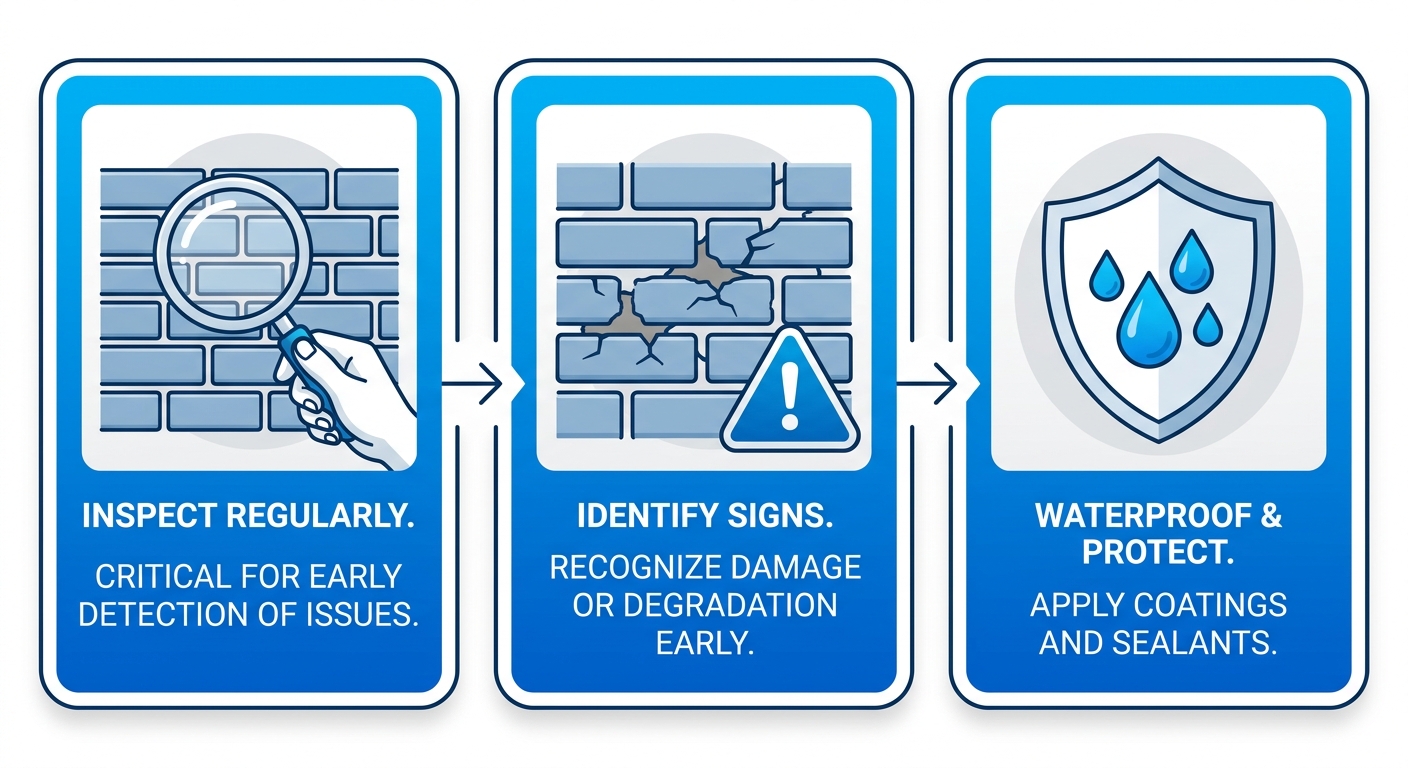
Three steps to extend the life of your tuckpointing.
Regular Inspections and Maintenance
To maximize brick repointing longevity, we recommend a simple routine: walk the perimeter of your building at least twice a year, ideally in the spring and fall, and again after any severe weather event. These inspections don’t require special equipment, just a careful eye and a willingness to look closely at the mortar joints.
During your inspection, create a checklist and look for missing or loose mortar, any cracks wider than 1/8 of an inch, and a white, powdery substance on the brick faces known as efflorescence. You should also look for spalling bricks, where the face of the brick has flaked or popped off, and any water stains on interior walls near the masonry. A key DIY test is to gently press a screwdriver against a suspect mortar joint; if the material feels soft or crumbles easily, it’s a clear sign that the joint is failing and needs attention.
While self-inspections are valuable, we also advise reaching out for a professional assessment from our team at B&G Tuckpointing if you notice multiple areas of concern. Early intervention is always the most affordable strategy.
Signs of Mortar Joint Deterioration
Identifying early mortar joint deterioration can be the difference between a simple spot repair and a major rebuilding project. The most obvious sign is crumbling or recessed mortar, where the joints appear to be eating themselves away from the brick. This leaves gaps that invite moisture deep into the wall system.
Hairline cracks are often overlooked but are just as dangerous as wider gaps. These small fissures can act as channels for water intrusion, which freezes and expands in cold weather, common in St. Louis masonry. If you spot a single cracked joint, spot-repairing it immediately can stop water from migrating behind the brick and causing widespread damage. Other critical signs include a hollow sound when you tap on the brick, the presence of mold or mildew inside your home on walls adjacent to the brickwork, and bricks that have begun to shift or bulge outward.
The condition of the mortar is the best indicator of your wall’s overall health. Addressing these signs early keeps your building structurally sound and prevents the need for more extensive restoration work down the road.
Waterproofing and Preventive Measures
Once your mortar joints are in good condition, a thoughtful waterproofing strategy is essential for defending them against rain, snow, and humidity. We advise using a breathable silane/siloxane water repellent, which penetrates the masonry to block water while still allowing trapped moisture to escape as vapor. This is a crucial distinction because applying a non-breathable sealer can create a vapor barrier that traps moisture inside the wall, leading to accelerated deterioration. A word of caution here: always follow the manufacturer’s instructions carefully, as over-application of a water repellent can overwhelm the pores and mimic the effects of a non-breathable film.
For professional guidance and application, consider our caulking waterproofing masonry St. Louis services. Beyond sealers, a holistic approach to water management makes a world of difference. Keep your gutters and downspouts clear of debris and ensure they are directed well away from the foundation to minimize the amount of water that splashes against your brickwork. We also recommend keeping all vegetation, including ivy and decorative shrubs, trimmed back from the walls, as they can hold relentless moisture against the mortar and send damaging roots into the joints.
Proactive maintenance is the most effective way to protect your building. By coupling regular checks with a sound moisture-management plan, we aim to enhance the appearance and improve the integrity of your house or building, ensuring it stands strong and looks its best for decades to come.
For a custom quote on a maintenance plan or any new tuckpointing work, contact us today.
Expert Considerations for Historic Homes and Structural Variability
While standard tuckpointing applies to many homes, historic and structurally variable buildings demand a more nuanced expert approach. Our two decades of experience in the St. Louis area have taught us that a one-size-fits-all approach can do more harm than good. Understanding the unique composition and condition of each wall is essential to preserving both beauty and structural integrity.
Many historic homes rely on softer, lime-based mortars that breathe differently than modern cement mixes. Using hard Portland cement on these older bricks traps moisture and can crack the masonry. That’s why a thorough mortar analysis–testing color, texture, and compressive strength–is the first step before any repointing work. We then custom-mix the replacement mortar to match the original’s hue, aggregate size, and hardness. Joint profile width and depth must also duplicate the original to maintain historical accuracy and weather resistance. We follow technical standards from the Brick Industry Association, whose repointing guidelines help ensure our repairs last.
Structural variability adds complexity. Uneven settling, non-standard brick sizes, and altered openings mean no two walls are alike. Our technicians inspect every property before any repointing begins, uncovering hidden issues like eroded lintels or corroded ties that less experienced crews might miss. Homeowners often ask how long does tuckpointing last–it depends heavily on the mortar mix and structural condition. In historic homes, proper joint preparation and material selection drive brick repointing longevity. When we treat mortar joint deterioration at its source, we restore the building’s long-term resilience.
With these expert considerations in mind, it’s clear why professional masonry restoration is the best investment for your historic property. For homes in St. Louis historic districts, our team specializes in masonry restoration St. Louis, ensuring every detail respects the original craftsmanship while delivering modern durability. We aim to enhance the appearance and improve the integrity of your house or building, and we’re proud to bring over 20 years of hands-on masonry experience and strong customer relationships to every historic restoration in the St. Louis area.
Frequently Asked Questions About Tuckpointing Lifespan
Now, let’s answer some common questions about how long tuckpointing lasts.
How long does tuckpointing last?
Great question! When done properly, tuckpointing can last 15 to 30 years. Factors like weather and mortar quality largely determine how long tuckpointing lasts.
What factors affect tuckpointing lifespan?
Climate, mortar mix quality, wall orientation, and building maintenance all affect lifespan. For example, walls facing relentless sun or rain age faster.
What are signs that tuckpointing needs replacement?
Crumbling mortar, wide cracks, and water staining are red flags–early mortar joint deterioration is the most obvious sign. Catching these issues early prevents bigger problems.
Can regular maintenance extend tuckpointing life?
Absolutely. Occasional inspections and prompt spot repairs can significantly improve brick repointing longevity. We aim to enhance the appearance and improve the integrity of your house or building through preventative care.
When should I call a professional?
If you notice widespread crumbling or cracks, contact a trusted tuckpointing company St. Louis. B&G Tuckpointing provides thorough inspections and can estimate how long tuckpointing lasts for your unique conditions.
Securing Long-Term Masonry Protection
Now that you understand the tuckpointing process, it is helpful to know how long does tuckpointing last when the work is done right. With our experienced team, lasting brick repointing results are built on high-quality mortar mix, thorough joint preparation, and skilled application. Ignoring early signs of deterioration of mortar joints can turn small cracks into costly structural repairs, so catching problems early is important. We deliver color-matched solutions that address localized wear before it spreads. We aim to enhance the appearance and improve the integrity of your house or building. Contact B&G today for a custom quote and secure your masonry’s future.